"God Is My Salvation"
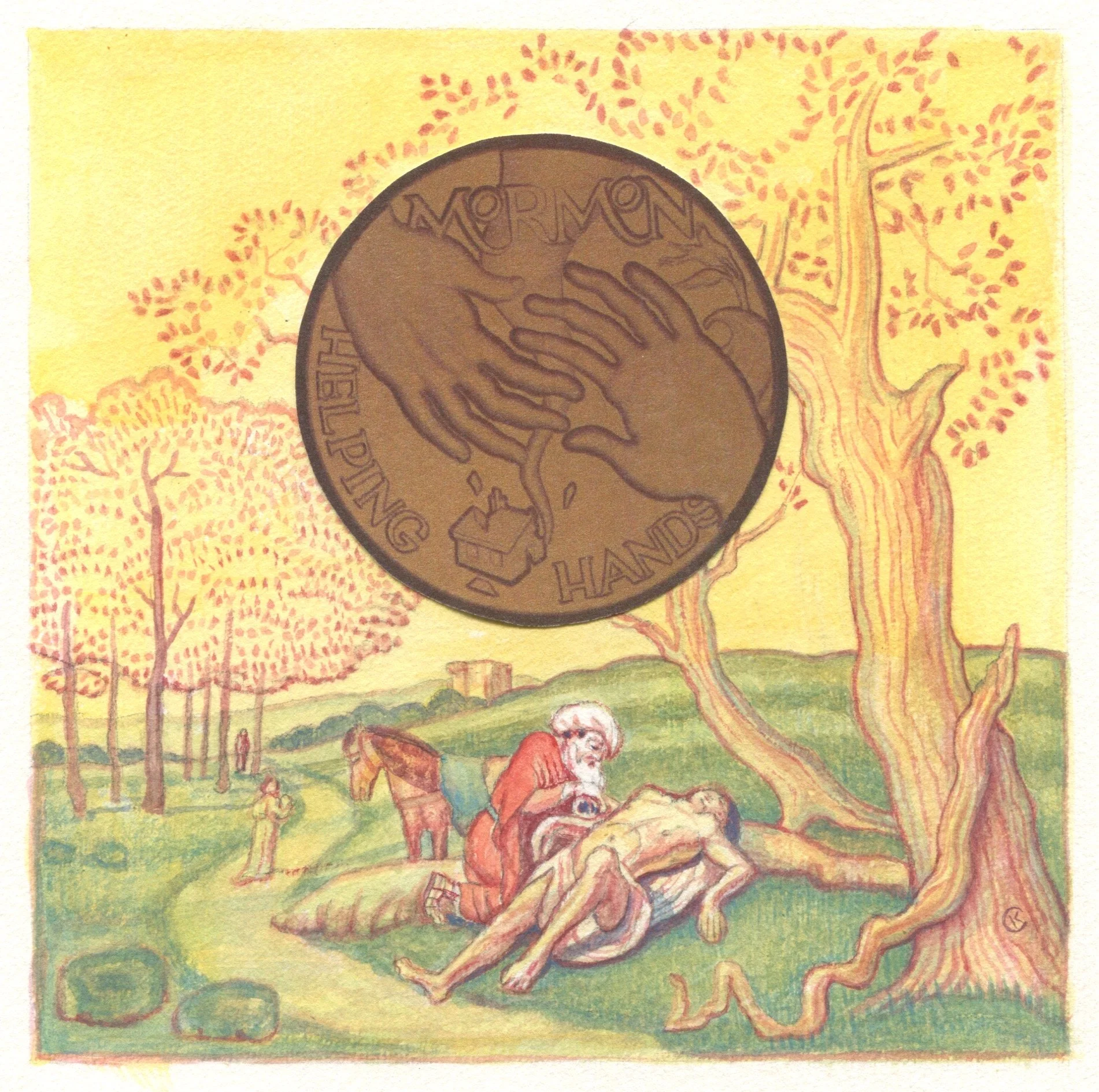
Kent Christensen (American, born 1957)
Mormon Helping Hands (2014)
Colored pencil and mixed media on paper, 6 x 6 inches
Private collection
Used with permission
The opening chapters of Isaiah begin with strong warnings to the people of Judah about their corruption, injustice, and empty religious practices. Through the prophet Isaiah, God calls the people to repentance and promises that forgiveness and restoration are possible if they turn back to Him. Isaiah has a powerful vision of God in the temple, where he is called to be a prophet after recognizing his own unworthiness. Chapters 7–9 include prophecies given during a time of political crisis, including the promise of a child called Immanuel and the prophecy of a future ruler known as the “Prince of Peace.” The later chapters describe judgment against arrogant nations but also promise hope through a future righteous king, who will bring justice and peace.
One major theme in these chapters is the call to genuine repentance and moral integrity rather than empty religious rituals. Another theme is God’s justice—warning that corruption, oppression, and pride eventually bring consequences. At the same time, Isaiah repeatedly points toward hope and restoration through a future righteous leader. These chapters also highlight God’s holiness and the importance of responding to Him with humility and faithfulness.
The archetypal scriptural example of religious hypocrisy is Jesus' parable of the Good Samaritan, a stinging criticism of people who profess goodness but fail to show God-like compassion. In an artwork created by Kent Christensen that connects Old Master art and a contemporary medallion of Mormon helping hands (a reference to the program of members' community service wearing identically-branded vests), the artist directly challenges us not to be like the Samaritan and extend service to those we meet, even those very different from oursleves. Isaiah also reminds readers that even during times of political tension or uncertainty, hope can exist through leadership grounded in justice and peace. Ultimately, these chapters encourage people to pursue integrity, compassion, and humility while trusting that renewal and transformation are possible.
Gospel Questions
1. Do your actions match your beliefs?
2. How can you and your community pursue both justice and compassion?
3. How does Isaiah’s vision of peace challenge modern views of power and leadership?
For Children and Youth
Hi. God sent Isaiah to tell the people to stop doing wrong and start living the right way. He also promised that one day a good and peaceful king would come to make things better.
1. When have you had to be patient before receiving a great blessing?
More from the Art Companion