
Black Pioneer: Mauli Bonner on Championing the Stories of Early Black Saints
Feb. 20 2026 | Listen to the podcast | Watch on Youtube
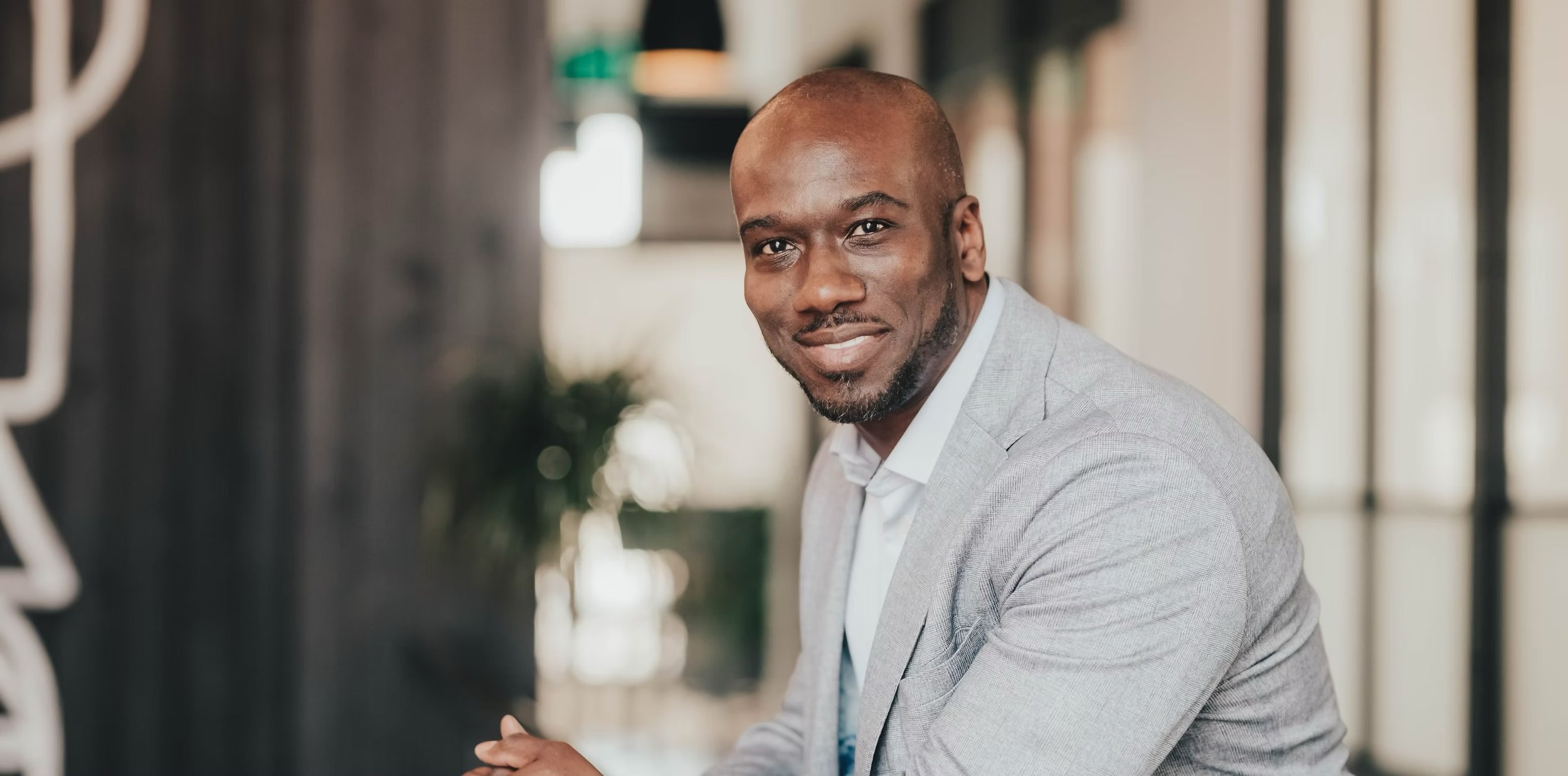
Meet Mauli
Glen Nelson: Hello and welcome to the Center Studio Podcast. Now in our ninth year of monthly interviews, I have the great pleasure to meet interesting creative artists who are members of The Church of Jesus Christ of Latter-day Saints and ask them about themselves and their work. Now, Mauli Bonner has a problem. He does so many things in different artistic disciplines that it's hard to pin him down. He writes for Grammy Award winning artists. He works on television singing competitions. He scores music for feature films and TV. He's a motivational speaker, a children's book author, he writes and directs films, and he's the founder of a non-profit organization, Lift Up Voices Foundation. Welcome, Mauli. How are you today?
Mauli Bonner: I am great and when you listen to all those things, I'm like, okay, I gotta cut some of this stuff out. I didn't realize I was doing so much.
Glen Nelson: But it's cool though. I think it's gonna make it so much fun to talk with you today because you're doing such different kinds of things. Like, when you introduce yourself professionally, how do you describe yourself?
Mauli Bonner: That's a great question because it depends on who I'm talking to. Because if I'm with a certain group of people, then I'm just my wife's husband. Because she's awesome in her own right as a therapist and as a social worker. And then there's other times when I just introduce myself as a director, or I'm just a vocal coach, or I'm an artist development director. It depends on the circle, I think people need to feel like, okay, who are you, what do you do? And the list of things just confuses them. So I have to try to make it easy.
Glen Nelson: Well, people are not as smart as we want to think they are. Let's say in your personal life, though, how do you self-identify? What's about that?
Mauli Bonner: You know, I've accepted the fact that I am a filmmaker. Like before I did the Green Flake film, and I've since just kind of been running and writing and directing. And so there's been a number of projects, but I would say I'm not a filmmaker. I just make films. But now it's taken up so much of my life that I am a filmmaker and I love it. I love it, Glen.
Glen Nelson: Well, you know, if you do one, it's an accident. If you do three and four, then all of a sudden, yeah, you probably should say you're a filmmaker. But you're also a dad. Like, give me all those other kinds of descriptions.
Mauli Bonner: Right, Yes, yes, yes, yes. I'm a father of two kids, Geo and Ari. And that's, you know, of course my favorite job. I love it, love it, love it. It's like what I've always wanted to be. When people ask you, what do want to do when you grow up? I want to be a dad and husband, but like the best of both, you know? So I love doing that. And, you know, I've also loved serving in my calling in church. Like I just got released in the bishopric. We were there for seven years, you know, so we did some overtime in the bishopric, but it was like the perfect time. It was right when the bishopric became fully responsible for the youth, where they kind of let go of other responsibilities that typical bishoprics would have in the past, and we just got to really be with the young adults and the youth, and they were just great. It has been the highlight of my life, to be honest.
Glen Nelson: Yeah, yeah, that's really cool. I can imagine them just feeding off of your energy. You know, we haven't met before. I mean, I am a fan of your work. I know your work a little bit, but we have mutual friends. And Lita and Kevin Giddins are a couple of those friends, and they lead the Center's Diversity and Inclusion Committee. And they said to me recently, You’ve got to talk with Mauli. He's working on some cool projects, and I should ask you about them. So let's start there. What are you working on right now?
Mauli Bonner: Well, I'm going to first say shout out to Lita and Kevin because Kevin is a big reason why a number of my siblings went to BYU and were part of the Young Ambassadors program. Kevin was such a great advocate for our family, the Bonner family, getting into music as it pertains to musical theater and whatever else. So Kevin, we love you. The Giddins, we love that family. And now I forget your question. So you got to ask it again.
Telling Elijah Abel’s Story
Glen Nelson: What are you working on these days?
Mauli Bonner: Okay, right now I am heavily into this film project. Well, it's not just a film. It's a series, a six part series, six dramatized episodes and six documentary episodes of Elijah Abel's life. Elijah Abel was one of the first Black pioneers to have the priesthood. And right now I am rewriting some of the scenes, adding some things in and editing as we've been going. So there's a ton of footage.
Glen Nelson: Well, I'm gonna be all over this thing when it comes out, but it's not due for a little while. You're still working, you're still, it's still in process, right?
Mauli Bonner: Yes, yes, yes it is.
Glen Nelson: So this is a complex project, so let's unpack it a little bit. So part of it is a dramatization that's a six episode series. And then there's another side of it, what's that?
Mauli Bonner: The documentary side, so if you are someone that just wants to know what happened, like who said what and when? And like how did this unfold with the priesthood? Like so there were Black people that had the priesthood. What changed? When? What meaning? So that's what the documentary side gives you is like the play by play to give you an in-depth look of the history and the times that they were in and how that evolved. And the film side, the series, the dramatized episodes, that allows you to connect to the people that we're talking about, the human beings that actually lived it. And so for some people, you know, they may not care about the documentary stuff. They just want the series. And for the others, they may want the documentary. Some may want both. And what I didn't want, Glen, is for people to watch the film and then not know what part was dramatized, what really happened, so they'll have all the information.
Glen Nelson: I like your approach. That's a cool thing. I'm not familiar though with other projects like it that have had that dual production side of it, are you? Is that a common thing?
Mauli Bonner: I'm not. Honestly, I'm not. But I just know this is such sensitive history. And it's not just a story about Elijah's life. And it's not just Black history. And it's not just Church histories. But we're entwining all of these things and weaving them together. And I know that there are going to be people that have had these questions that's been gnawing at them for years. And I want them to be able to have those answers, and not just a show, but also with the historical documented answers of this is what happened and when. I just don't want to sell anybody short. I want this to be the launching pad.
Glen Nelson: Is the research side of it difficult? Like how are you finding the history?
Mauli Bonner: I appreciate you asking. So I'm not a historian, right? I'm a filmmaker, you know, but I love learning about my history within my faith, within my people, and I thought, I'm going be doing this for a decade before I can even get started. But I've had historians that have been so generous with their time and their resources saying, “What do you need to know? What are you looking at?” And “I can give you these journal entries. I will give you this information”—the historians Amy Theriot, Paul Reeve have been so instrumental for me being able to decipher this history. And then after I met with the Church, with the Church communications and history department because I wanted them to know this is an important project that I'm working on. It's our shared history, and I didn't know how the Church was gonna respond to that, like “Wait what are you doing, who are you?” but they were like “What do you need, what do you need access?”
Glen Nelson: Really? That's nice.
Mauli Bonner: You know what I'm saying? Like, I want people to know that, because you would think that the Church is like, “Uh-oh, what's going on?” But they are like, “Door's open, here's historians, make sure you guys give him what he needs.” So it's been so easy to be able to pull the history that I need with the support of the Church.
Black Pioneer
Glen Nelson: Yeah, really cool. This probably is related in some way to your previous film, His Name Is Green Flake, right?
Mauli Bonner: Yeah, it is. It is.
Glen Nelson: Like maybe if someone is listening and isn't aware of that film, which was three years ago, I want to say. So what is that film about?
Mauli Bonner: Yeah, or four, four now. His Name Is Green Flake was the name of the film, and it follows the life of free and enslaved pioneers that came across that trek in 1847. So it mainly focuses on Green Flake, this 19-year old enslaved young man who drove the first wagon into the valley. So that is like, those who are hearing that for the first time are probably like, “wait, what?”
Glen Nelson: I know.
Mauli Bonner: You think pioneer day or the pioneer trek, you don't think of one, Black folks, and two, an enslaved 19-year old, the same age as our missionaries that go out, driving the first wagon. And it follows his life and helps us learn of the enslaved experience in the early Church. The film though, is on Amazon Prime under Black Pioneer. So if you're looking to go check it out, it would be Black Pioneer on Amazon Prime or His Name Is Green Flake if you go to like Deseret Book.
Glen Nelson: All right. I mean, my guess is that you learned quite a lot creating that film, which you also wrote and directed that you're building upon. what are, you know, as you have access to these historians and the Church records, and I've worked with Paul Reeve in the past, he's, you know, he's a genius. I mean, this is extraordinary work.
Mauli Bonner: Yeah. Yeah, he is.
Glen Nelson: What are you learning about yourself and history and everything? I mean, you've given some gorgeous interviews in the past. I remember one talking about that you originally came across some of this information that was new to you, and you were like, Whoa, whatever. So you've told that story before, but what kinds of thing are you learning about yourself in the process of making these films?
Mauli Bonner: I think I'm learning about where I fit within my people. Like my great-grandfather was enslaved, Glen. And I wonder, what is that experience for someone who was enslaved navigating America that has so much to offer but is limited in so many ways? And then now once freedom comes, how do they keep their faith when they have people who share their faith who have treated them in the worst way. How do they do that? And so I now look at my life experiences and I have like microcosms of that, like very small versions of their experiences that African Americans experience now today because we've progressed so far, but there's still some really harmful and hard experiences. And I look at some of the things that I've had to endure as it pertains to racism and I can see how my faith was able to sustain by looking at them. Like their faith was rooted completely in Christ and the gospel of Jesus Christ, not in their peers and other members, not in their leaders. It was in the gospel so that no matter what happened in the world around them, that was never negotiable. And so I feel like I've learned more about the strength of my own faith and where it comes from and why it's been able to sustain racism. And I just, I have loved this journey and uncovering the stories.
Scoring Jane and Emma
Glen Nelson: Incredible. I think I probably should mention one more. You wrote the music for the film Jane and Emma. Was that kind of the first time that you had thought about making art out of this shared cultural experience?
Mauli Bonner: Okay, I'm gonna tell you something that I've never told anybody, never come out of my mouth. So I did the score, me and Jonathan Keith, the partner that I worked in music with. I had never done any score, period, right? And this is the secret that I'm telling you. They didn't know that when they asked me. Someone said, “Hey, do you know how to..?” I'm like, "Yeah.”
Glen Nelson: Sure. Like a true artist, there.
Mauli Bonner: Cause I was always been told to say yes and then just figure it out like, “Of course, of course, yes, of course, what do you need?” What is this? And so I had never scored a film before. That was my first time. And it was an incredible experience. Of course my background is in music. It's not so unfamiliar that I didn't know what I was doing, but it was fascinating to me that even though it was my first time doing it, I felt like I've been doing it my whole career. And it really made me connect to film in a new way of the storytelling part of it with the Jane and Emma film.
Doing What Scares You: A New Horror Film
Glen Nelson: Okay, yeah, it just clicked for you. Now, a very different kind of movie, I see on IMDb that you have another film in post-production, The Watching, a horror film that you wrote and directed?
Mauli Bonner: Stop digging, Glen! Okay. Okay.
Glen Nelson: Well, I mean, it was like, Well, that seems like I have to ask about that.
Mauli Bonner: Yeah, so that is in post-production now. It's not out, but it's something we shot and editing. So it's a horror film, right? And it's like totally different genre than this religious period piece filming. But it was so fun. Again, just to explore storytelling in this new way, you know, with my background is in music and helping artists tell their most authentic self through song and music. Making films definitely felt like it was consistent with what I already do. But horror films, which is funny, The Watching, I don't watch horror films, because I get scared too easy. Like, I'm always grabbing onto my wife, and she's always like, “Let go of me.” I'm like, “I'm not watching it unless I can hold you.” And then here I am making a horror film. Yeah, that's funny. That's why you brought it up.
Glen Nelson: A few months ago, the Center published an essay from a film scholar in BYU-Hawaii on Mormon horror. And you know, there's a whole lot of them. There are horror filmmakers who are using LDS stories and LDS characters in them. And then there are also LDS filmmakers who are mining a rich history and giving it a horrific slant.
Mauli Bonner: Yeah.
Glen Nelson: So you're in pretty good company, it is sort of fascinating to me that this is a thing. But it's legit. I mean, there are lots of people working in this area.
Mauli Bonner: Oh, that's funny. I wouldn't even have known that because like I said, horror is not my thing. This, what I'm doing right now, the period piece stuff, this is, you know, but which is interesting because 2018 was my launching into it. I had not thought about this history hardly. Elijah Abel, Green Flake, Black pioneers is not something that I was raised up on researching and knowing. I felt like I was learning it and telling the story at the same time. It was such an interesting process.
Glen Nelson: You know, a lot of artists are using science, for example, or expanding what they know and then turning that into their art. They're informing that rather than just looking at a thing and then kind of duplicating that or telling a story that's already familiar to them. So this doesn't surprise me at all that you're expanding the kind of work that you're making because you're a human and you're learning and growing and why wouldn't you, you know, put the things that you're learning and growing into a movie, but they're also a good excuse to do that exploration too.
Mauli Bonner: Absolutely, absolutely. And it's fun putting, like, what I want is, this is like the Marvel universe of Black pioneers, because Green Flake had it, it was its film, but a lot of those characters are also in this next film. And this won't be the last, this Elijah Abel project. So I continue to tell these stories by involving all of these same characters, same actors, so we can really feel connected to their history.
Inspiring Others at Church and Onstage
Glen Nelson: I don't know if this is going to sound too weird, but Mauli, I love your vibe. Like you radiate something extraordinary. I can't quite put my finger what it is exactly, but it doesn't surprise me that you're also a noted public speaker. So how did that aspect of yourself begin, and what are the kinds of messages that you want to share with audiences?
Mauli Bonner: Okay, what's interesting about that is, it doesn't seem like it, but I'm an introvert. Like I am an introvert. Like people, I'm like, Okay, here we go. If you leave me alone in a room for a long, long time, I am like, that's heaven on earth. I'm an introvert, but I guess the way I express it doesn't seem like it, you know? And so when this film started coming out and the Green Flake one, the first one I was doing, and I started talking about it, I realized that there was a voice missing in this space and that I had a role to play as just speaking about it. And now as a public speaker, I do speak on many different topics because I have spent my career developing artists to go and be their best self, right? And so I always thought that I would be in the background saying, “Now go get them.” You know, and I'm back behind the stage, but it wasn't until I got responses that I did when I would go and speak on the experiences that I've had with artist development, with filmmaking, that I realized that there is a voice that's needed, especially within my faith as an African American male who is so devout in The Church of Jesus Christ of Latter-day Saints. It's unique, and I don't want people to not have that.
Glen Nelson: Yeah, well, I'm all for it not being unique, if anyone is asking my opinion on things. As I mentioned, you’ve given some really great interviews in the past, and I was listening to one in preparation for this and you were talking about being in the bishopric.
Mauli Bonner: Hey yeah, yeah!
Glen Nelson: …and that sometimes young people would come up to you and kind of pull you aside and ask you questions. And I suspect that they're wanting from you, you know, real answers to difficult issues, or maybe just the chance to voice what it is that they're living with. So I would love to ask you, what has your experience been as sort of this person that people can turn to? And if you don't mind, what are some of the questions that they're asking you?
Mauli Bonner: Yeah, so bishopric for seven years and right from the beginning it was questions, it's the thoughts that we all have. It's not that these questions that are out of nowhere. They’re the same questions that a lot of us have, you know, like, “So were Black people always kept out of the temple or when did it start? Is our church racist? Why do you stay if this is the history?” These are the questions that they would come with.
Glen Nelson: Yeah, real questions.
Mauli Bonner: Real questions, and what has the Church said about it? Do they still feel that way? And just recently, just a month ago, was Declaration Two. For those of you who are active members in The Church of Christ of Latter-day Saints, that was when we would learn about the priesthood being given to all men or the priesthood ban being lifted from those of African descent. And I was asked to teach a number of students of my stakes. So some stakes got together and said, “Will you teach the seminary class to the youth?” and I was able to teach that, which is wonderful, but before I taught, I asked for them to write down their questions, the ones that gnaw at them, the ones that they don't know how to ask or that they keep asking, that they can't let go of, now is the time, and so they wrote down their questions, and the majority of the questions were about what who who took the priesthood from Black people.
Why wouldn't God stop all of this? These type of questions that they need discussion for. We may not have full complete answers to, but at least a platform, a place to talk about it. And so we were able to really talk through that, which was incredible. And I find that this was not unique to my ward, these questions. This is something that whenever I go speak, people always pull me aside and have these type of questions.
Glen Nelson: Yeah, all right, that's cool. I'm jealous of these young people who have that kind of access. I bet they walked away feeling like, Somebody was listening to me, and maybe I don't have it all figured out this very minute, but eventually there will be some answers that will bring me some peace. So it's very cool. I mean, you're amazing. Congratulations on that.
Mauli Bonner: I appreciate that. I appreciate that. I will say that like my message after I answer whatever their question is that it's okay to have the questions and the frustrations. Take those to the Lord and take them to people that you feel like have some information. But at the end of the day, know that there's going to be more, hard things, more questions, more tough history, things you didn't know. And just be prepared for that. Know that's a part of our journey as Latter-day Saints.
Wrestling with History
Glen Nelson: Yeah, beautiful. You know, when I knew I was going to be talking with you today, I had asked a couple of friends who were in their twenties, they’re recent college grads, if they had any questions for you to ask. So if you're up for it, I have a couple of questions for them. You ready? Okay?
Mauli Bonner: Let’s do this.
Glen Nelson: So Nick asks, “In regards to race and inequality, how do you apply grace to the failing Church leaders of old and to contemporary saints or peers who don't care about those issues as deeply as you do?” That's a pretty good question. I mean, I think, I'm sure you've wrestled with Church history like many people do. How would you respond to this question of grace for others?
Mauli Bonner: Yeah, you know what's interesting? I don't even see it as grace. I just see them as a human, living their human experience, doing the best that they can do. Like that's, that was me. That's me in my imperfections. That's Peter. I go straight to thinking of Jesus Christ and his apostles that walk with him, got to know him so personally. And for Peter to say what he said as Jesus Christ, our Savior, is dying on the cross. He doesn't know him. Denying that he has any connection to him. How could he do that? So I could sit here and say, “how could this apostle do that? How could I be Christian after this apostle did what he did to Christ?” Which is Peter doing what he could. And of course we hope that he wouldn't and that he would be willing to say, I am an apostle and he is the Savior, but he had his journey. And I don't think that we sit here angry at Peter or what he did. How could he? But I think it's harder for us to see the human in our leaders of just a hundred years ago or even today. It's so much easier to say, “How could they?” And the unfortunate part and the fortunate part is they're just men. Awesome men, incredible men. They were called of God to serve in a certain capacity and they will not do it perfectly. It will not be flawless. It never has been. And what we do know how to do as Latter-day Saints is dig through tough history. This is what we do. Like every week we go through the Bible and read these horrific stories. Like isn't it in primary age? We know how to do this. Like we just got to plug and play. We know how to learn hard history. Joseph of Egypt, yes, he was enslaved. His brothers threw him in that hole, but we don't sanitize it and say, well, maybe it wasn't his brothers or maybe he wasn't in jail. It wasn't a jail. was like, we tell it all. And then we draw where's the faith building story there? What can I pull from this? So now, as we look at, sorry, this is the long, I'm almost done, Glen. As we look at difficult history and we wonder how could this happen? Think of where's the faith? Where is the faith in this? Who is living?
Glen Nelson: No, please.
Mauli Bonner: Who is living in a way that I can draw strength from when I have my difficult things? Because they're there in those stories. And that's where we need to draw strength from. Instead of condemning the people that did the worst things, they were the worst things. But now where's the faith journey in it? And I hope in these films that people will be able to see those.
Glen Nelson: Feel free to talk and talk and talk. I learning so much from your comments.
Mauli Bonner: Okay, I felt like I could just sit here and do a sermon, but I'm like, let me just, you know. Okay.
“We Love What You’re Doing”
Glen Nelson: Preach, dude. Okay, here's a question from Brianne. “What has been the reception of your work from people inside and outside the Church?”
Mauli Bonner: Brianne, this was my fear. Like, I love human beings. I love to bring people together and find a way to see our similarities, to celebrate our differences. But with this film, I was like, this is gonna do the opposite of what I love to do. This is gonna make people outside the Church really mad and feel like, I knew it. I knew it. They are exactly who I thought they were. People in the Church are gonna be like, Why is he doing this to us? How is he gonna try to tell these stories and make us look so, but the Lord just kept His boot in my back or His sandal or cloth or barefoot, whatever He’s wearing was in my back and saying, Do it, tell the story, tell the story. And so, I did it with as much transparency and love and honesty as I could. And I thought it was going to be received poorly on both sides. But when I tell you, Brianne, the responses that I got on both sides, people in the faith and out of the faith, I have yet to have negative feedback. Like nobody's even said something online to me that was like, Oh, yeah, you, nothing. Zero. How in the world? And so it has been received so well. My biggest fear was the Church administration, the Church entity as we know it. The Church is going to come down and say, Mauli, what are you doing? And the Church was like, Love what you're doing. One of the leaders even said, one of the 12 apostles now said, “It feels like love.” And I'm like, wow. Telling this difficult history can feel like love. And that meant everything to me. Now I'm fighting back tears because I just, the Briannes in the world who don't get to have these experiences of knowing that our leaders are like, yes, let's find more. Let's tell these stories in a way that's honest and unifying. That is our leaders. That's our church. But we have a role to play in it. I have to do my part. I think I'm the one that needs to these stories.
Glen Nelson: Did this general authority reach out to you personally, or did you just hear it in a around about way?
Mauli Bonner: I ran into him randomly. I ran into him randomly. I'll just say so. It was Bishop Caussé, Presiding Bishop Caussé while he was Presiding Bishop. He's an apostle now. But it was Bishop Caussé who said, ”And we love what you're doing.” These were his words. “We love what you're doing.” And he says, “It feels like love. I have to tell you, it feels like love.” And I was just, I just wanted to bury my chest, my face in his chest and just, you know, because that meant the world to me. Hard things can feel like love if we take the Lord with us and we're looking for where is the faith? Where in this journey? Because there's going to be hard things and hurtful things, but there's a thread that we can pull on that's full of faith and endurance.
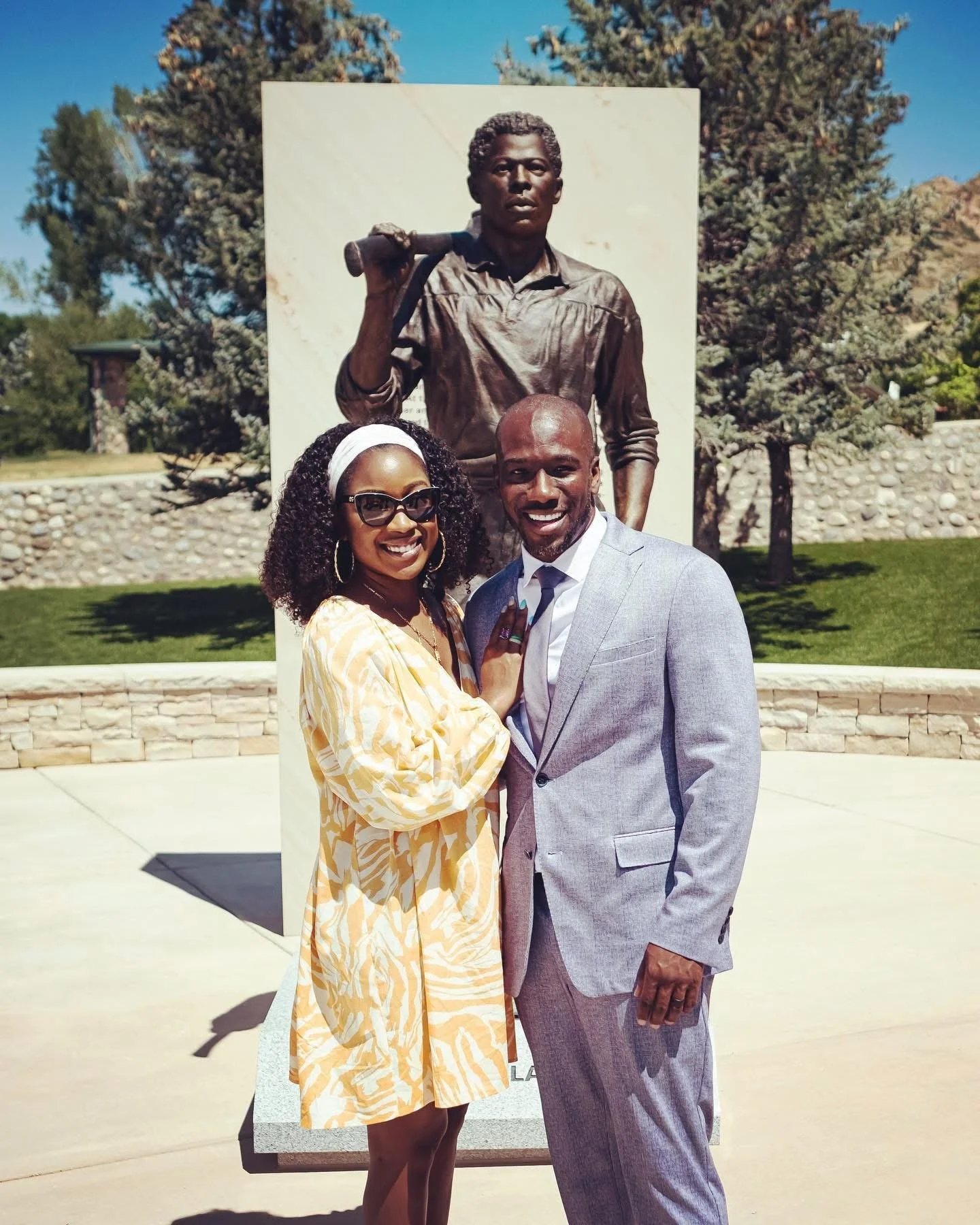
The Green Flake Memorial
Glen Nelson: Mauli, when I hear that story, it makes me think you can file that lovely comment away and coast on that for a long time, when you have hard things to face. She had another question, Brianne did. She wants to know about the Green Flake Memorial. You mentioned somewhere online, I think, that it was your favorite place in the world. I don't know what she's talking about. So could you tell us about the memorial and how it came to be and like what it means to you?
Mauli Bonner: Yes, it's the monument at This Is the Place Heritage Park, and it's a beautiful monument. I'm going to send you some pictures Glen of when I was there. It's a memorial that honors Green Flake, who drove the first wagon, his two brothers-in-law, who also came enslaved in that first advanced company, Vanguard Company, Oscar and Hark, his two brothers-in-law, and then Jane Manning James is also in this monument. She was free her whole life, but she was also a part of recognizing these pioneers that came across the trek in 1847. And it is majestic, it is so beautiful and so peaceful. And how that came about, it was not the plan. I made the film, Brianne, and I was supposed to be rich. I just knew it. I was like, I'm gonna be rich because it won every, the film won, every, best film in every film festival that it was in. And I was like, and I was just trying to make the film, and I threw it into festivals and I seriously was like, That’s why you want me to, I knew you were looking out for me, Lord. This is what it's about. You know, let the money grow. And then I was gonna look up places to take a picture by the monuments, you know, like, cause I live in California. So I'm like, Utah loves monuments. I see them every time I'm there. Black monument, something? No. A memorial of the enslaved pioneers? No matter how I wrote it, nothing came up. And then it just hit me like a wave. The same wave of inspiration that I felt when I was prompted to make the film. It was the monument. Make the monument. Like this was not about me making money. I'm gonna make that money. Please believe me. It's to happen. I've got to use it and it's coming. But for that project for sure, it was about…
Glen Nelson: You're not against the idea of it.
Mauli Bonner: …telling the story and they're having, they're being some visual representation where people can see our history as we talk about it. When they come and see, they can literally say, Here's their stories. They were here. And so at that monument and memorial at This Is the Place Park, it's right where they came through Immigration Canyon, where Green Flake drove that first wagon, and now they are recognized. And it was an incredible dedication, and thousands of people showed up to be there to celebrate it. You have to go and see it.
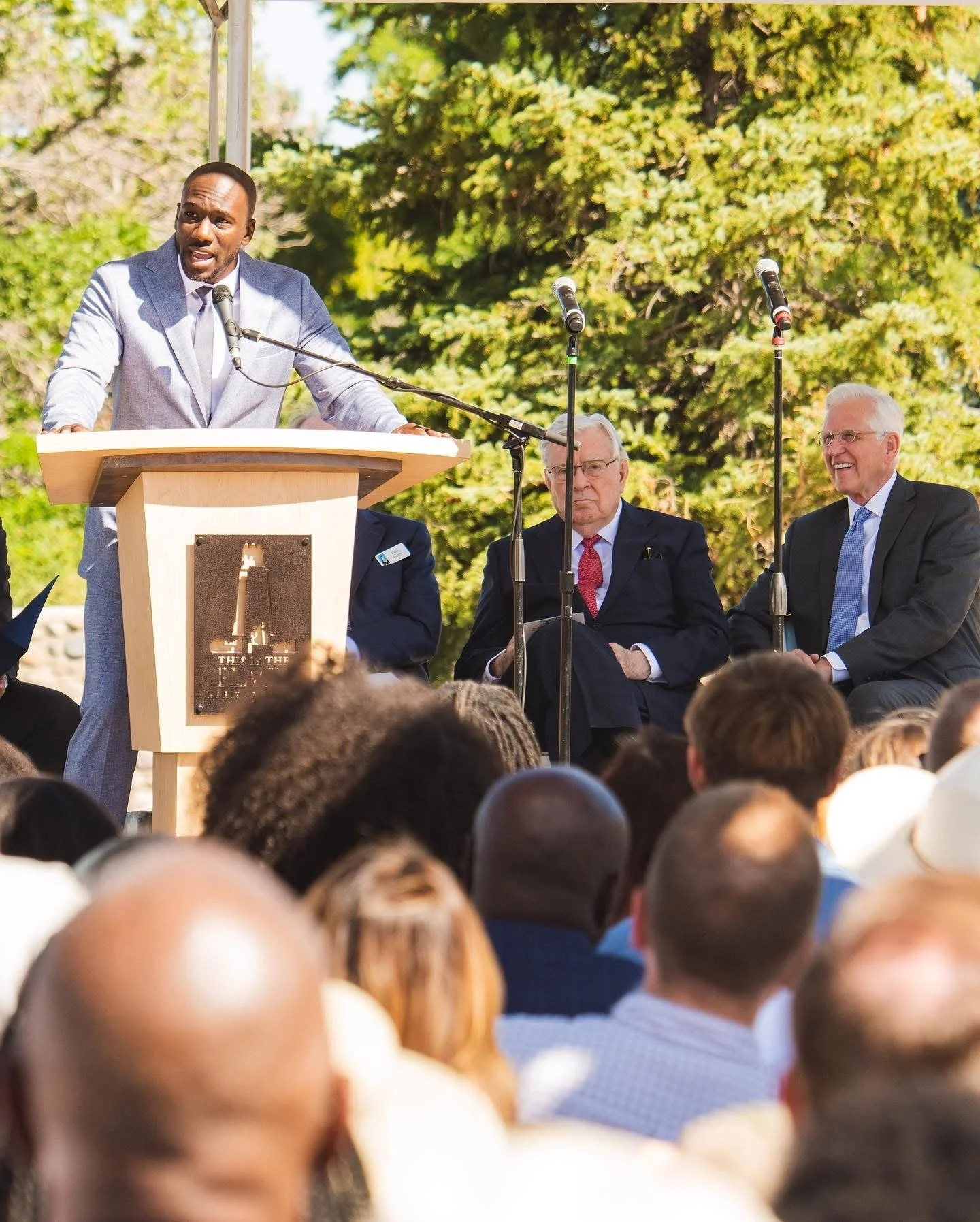
Glen Nelson: Okay. That sounds incredible. Congratulations for being a part of that. It's sort of funny, artists often are talking about legacy, and they're creating work that's going to last, their hope is to last. And so this idea that art is a monument too, is it just another way of saying legacy. But then to have artwork that becomes an actual monument, it's sort of the self-sustaining thing, which is beautiful to me. You know, your goal for the new project is to have these films and documentaries appear in church spaces in some way. What are you imagining the benefit of that to be? So Green Flake was a commercial project. Are you thinking the same way for this next project, or is it has a different kind of business model to it?
Mauli Bonner: Absolutely. Yes. Well, eventually I'd want it to be the same way where it can be viewed by anyone in the world because for me the Green Flake film was Black history, a Black American history that had to do with The Church of Jesus Christ of Latter-day Saints because Green Flake drove the first wagon in the largest pioneer migration in American history. That's Black American history, it's American history that had to do with our Church. This film, Elijah Abel, it has to do with our Church, the priesthood, the gospel, you know, and how it was navigated through the lens of the Black experience. So it's a little different, and it doesn't quite feel right for it to just go out to the public. And then I'm gonna have some youth and some ward that hear of this show on Netflix or Hulu or Prime, and it feels like someone's telling our history. And they have to learn it from what feels like the outside in. And that's what I want to avoid. I want it to be from the inside out. I want it to be initially through our church spaces. What I'm saying is not an easy thing. It's like it doesn't happen, but I'm comfortable doing what doesn't happen. But I just want you to know that it's not as easy as I want this to be in mission prep and seminary and Institute. I don't know how that's going to happen, but I do know that that has been in my mind throughout the creation of this, that it needs to be in our spaces where we learn, and then eventually can go out to the world, but we have to learn our history. And I don't know how that's gonna happen. There's gonna be miracles. Our Father in Heaven and Jesus Christ are like, they do those on the regular. So I can't wait to see how they make it happen.
Glen Nelson: Yeah, on the hour. Well, you know, this is my history too. And so I care about it, you know.
Your Beautiful Brown Skin
Glen Nelson: Okay, maybe this is a tangent, but I love the children's book you wrote with Chantèl. Is that your daughter?
Mauli Bonner: My wife, Chantél. Yes.
Glen Nelson: Your wife, okay, titled You're Beautiful. It includes this refrain, “your beautiful brown skin,” and it says, “When you were just a baby, I'd hold you all night long, I'd look into your eyes and sing this special song….” I was wondering, is that book autobiographical? Tell me a little bit more about the book.
Mauli Bonner: Yes, that book came from, well, OK, so I realized, so my daughter was four at the time, my son is seven, and there was an incident that happened at the school that didn't have to do with my children, but surrounding race, right? And it's something that minority children may likely face throughout their life at some point. Someone's going to say something or do something that is insensitive, and they have to navigate that. And I realized that my two brown children had never had their parents talk to them about how to handle that, and what happens, and how do you feel. And so I didn't want it to be a heavy discussion for these littles, for these babies, right? But I did want them to know if it happens, that that's not gonna blindside them, you know? And so I sat them down with me, and me being in music, I freestyled, which is like, you think of freestyle rap, right? As a songwriter, I freestyle write music songs. So I will just make it up on the spot and sing a thing. And so I did that with my children, and I sat them down with me and I sang to them and asked them, “Has anyone called you a name?” is what I would say, and they would say “No,” and I said, “Because you are dark?” and they say “No,” you know. "Has anyone made you feel sad?” “No.” So I continued to sing to them and ask them questions. And then it, it, it led me to sing, “You're beautiful, brown skin, brown skin child.” And that was the chorus that I would just keep coming to and then ask them questions and how, makes them beautiful and how their skin is God's skin. Because we look like him in his image. And it was just a beautiful moment. And then someone saw that video, because I put it online. It was just an impromptu video. They saw the video and said, “Can we make this a book?” And I was like, “yeah.” But there were certain things that just didn't quite make sense. And my wife, she is a therapist, a licensed clinician, as well as a social worker. And so she was able to make sure that we have the right messaging and everything. And so we together created a book from that moment.
Glen Nelson: You know, your kids are a little bit older now. Do they remember that experience?
Mauli Bonner: Absolutely. Absolutely.
Glen Nelson: Yeah, I can imagine.
Mauli Bonner: They still sing it. They still sing it, and they'll touch their skin and say how beautiful they are. It's wonderful. It's wonderful.
Glen Nelson: Has being a dad impacted your urgency to address issues regarding race and inequality?
Mauli Bonner: Is it me being a father? You know, I don't know that it's me being a dad. That's that was my urgency. It was more about the questions that my kids and other children would ask me because I seem to be approachable by little people, you know, and so they'll come and say things and ask things. I'm like, gosh, there needs to be somewhere or something, you know? And so my children are part of that, not necessarily because I'm their father, but because there are children who have questions. One question that stood out to me was my son, when he was looking at the art on one of the walls in the chapel, and he said that Paw Paw, his grandpa, wasn't going to be in heaven. “He can't be an angel.” And I said, “Of course he can.” “No, he can’t." And he points to the picture. “See?” And it was all white angels. And if he looked closely, he would say, no brunettes, and no whatever, because it was just blonde angels, right? And I was trying to explain to him that that wasn't the case, that that was just art that someone drew. And so I realized that instead of waiting for something to change, I just wanted to be a part of it.
Glen Nelson: You know, Mauli, I have to tell you, I've heard that story before. I've retold it so many times, I should practically get a royalty. That one story is so impactful for people who hear it. They're like, Well, of course, you know? And if they were part of that group of previously documented angels, that was their moment of illumination, to hear a young kid say that. So, hooray for him.
Mauli Bonner: Yeah.
Glen Nelson: And hooray for you being in the right place at the right time and also to share it and to make that moment feel like it was a universally valid moment, because it is. Okay, so everybody listening to this interview will know that this is a crazy time in the world…
Mauli Bonner: Yeah. I really appreciate that.
Not Feeling the Weight of the World
Glen Nelson: …regarding people simply unwilling to listen to each other or uninterested in understanding each other. How are you dealing personally with attempts to turn back the clock on issues like of race in society and to roll back diversity initiatives? I mean, is this something that's keeping you up at night, like how are you managing?
Mauli Bonner: Okay. I really appreciate that. I do love having discussions about it because I just love talking about it, what's happening in the world, and so what are you thinking, and why, and what if. I love that, right? But at the same time, the weight of it, I'm not feeling the weight of it because I feel honored to be here. Like, you guys, we have the opportunity to be the ones that we looked to the generations ago when we're like, they did it, they overcame it. Those who were walking with Martin Luther King, and you look at all the races and denominations, And generations before him, like, we have an opportunity to be who we think we are. Now is the time. And of course, there's going to be those who feel differently and things are not going in the direction we want them to go, but we have an opportunity to be a part of the positive change we want that to be. I love it. I love that we have this opportunity. Instead of just talking about them, it's here right now.
Glen Nelson: I was saying to you before we started our interview that I really was hoping that you would move to New York, even now more than ever. Should I look in my apartment building to see if there's an empty apartment? I love what you're saying. You know, I have a difficult time with the morning newspaper. And I'm struggling these days to try to figure out how to process what I'm reading. And should I delve into it? Should I follow it? Should I know all the players? Should I try to affect that? What is it doing to me and my psyche to do that? I mean, this is maybe a weird question, but do you have a strategy for digesting the news?
Mauli Bonner: I think it's a wonderful question. So, I’ll answer this for white people or people who have not been a part of a minority group that has had to navigate these discomforts. And you might be, like a majority of my white friends, have never experienced these feelings, right? Or seen these things and I'm like, you guys, this is just life. What is wrong with you? You know, like, you just navigate it. You know, as a child, I've had experiences that were similar to things that you see online that makes you, your heart ache and share and rant. But if you were someone who has experienced it your whole life, the weight of it is not so heavy. Doesn't mean that it's not as serious. Doesn't mean that it doesn't need our attention. But if you're new to navigating these spaces, you have to be able to step away. Does it mean that you don't care, but you do have to turn off certain things? And that doesn't mean that you're pulling away from things that need your attention. But you and your mental health has to step away. Turn it off. Don't deal with it this way. I'm going to spend this week focusing on the thing that I want to do that can help and see if I can make some progress, progress that you can measure. And that progress might be just a simple email. I'm going to write this email to this politician, whether they read it or not, but I'm going to do this. Or I'm going to reach out to this person that I know their family is impacted by something I saw. I just want to take them to lunch, spread some love on them, let them know how's whatever that thing is. You have to pick and choose. Don't do it all. You can't fire hose the thing if you're not used to the water. You can't.
Glen Nelson: With these interviews, Mauli, I often make people cry. You're making me cry because I've had friends who have been so overwhelmed with this stuff that they've shut down, they're medicated, they're not living the kind of life that they thought they were going to. It's really taken over, taken over their lives. And so I love what you just said. I feel really honored to have asked the question there.
Mauli Bonner: I'm gonna reiterate something because I have a dear friend who was just came to me and up in arms, just how can it just the outrage over what's happening. And I just have to say, “Okay, okay, it's happening. So what do you wanna do? What do you wanna do? What can we do?” So we know what's happening, and we'll go back and tap in to see if anything's changed a little bit, but tell me what do you wanna do?
Glen Nelson: Alright. Okay.
Mauli Bonner: What’s something we can do today? Let's do that today.
Glen Nelson: How do they respond to that? Does that make sense? Is that working with them?
Mauli Bonner: Honestly, it made sense, but I think what mattered the most is they felt like they had permission to. You have permission to take care of your mental health. You have to. You have to. Otherwise, you can't be helpful in this long journey because this is a forever work. It's not just right now. And we need you forever.
What’s Bringing You Joy?
Glen Nelson: Let me ask you, these days, given all of this stuff, and the many things that you have to do in your life, I mean, we're all getting through the day, and we all have responsibilities and whatever, I'd love to know what's bringing you joy right now.
Mauli Bonner: Yeah. It's interesting because what I'm going to share doesn't feel like joy, but so for the last four months, I've been the primary caretaker of my wife's grandmother, who helped raise her. People around me think I don't work, you know, because I'm just on the computer and editing and whatever else. I don't have a nine to five. So I'm able I was able to be with her full time. And that was, of course it has its challenges, but so rewarding to sit with someone who's been through so much and listen to their stories and help them try to get stronger. And then she recently passed away just a week and a half ago. And I feel so much joy for that opportunity that I had to spend with her. And even though she didn't get strong again, we got to spend such beautiful quality time. And I'm like, “Thank you Lord for that opportunity.” And so it's often when something bad happens, death, loss, something, something terrible in the news, I often can see what was the joy connected to that? I'm so grateful that I was able to make this relationship happen before this. You know, so I don't know if I'm not intentionally trying to focus on the positive, but I just see it. And I do think that those who don't just see it, take a second and take stock of the things that are joyful in your life. And because otherwise you'll miss it. You'll just miss it. And you'll think this year was so terrible. And it's like, it was not so bad. Let's hit some milestones. Let's talk about your children. What were the joyful things? Let's talk about your spouse. What did you overcome? Let's talk about you. What are you proud of? You know, and there's so much to be joyful for.
Glen Nelson: Yeah. And what did you learn?
Mauli Bonner: Through my experience with her?
Glen Nelson: I mean, generally speaking, like I was just adding to your list, you know, all this idea of that all of these experiences can bring you knowledge that you'll use even if it's a negative experience. Tell us about the Lift Up Voices Foundation.
Mauli Bonner: That’s my nonprofit. That's what I'm doing these films through, or at least the Green Flake film and this Elijah Abel project are through my nonprofit Lift Up Voices. But before it incorporated film and storytelling, it focused solely on music workshops and speaking. So we would go to groups that are impoverished or don't have certain resources, and we would empower them with how to talk about their story, how to share their story, how to express it through music, give them different skill sets. And when I began working in film, it continued in that work. If you were on my film set, you would see a little 12-year old shouting at the sound man, shouting at the camera operator, “Action!” Because they're getting mentored. So we have little ones who are getting mentored by all these departments and they're a part of telling these stories. And the reason why that's important is because I don't want this next generation to feel like they don't have a say in the stories that are told and how the history is unraveled and just wait for it to hit them. They can be a part of telling it. Learn the history, learn how to write a script, learn how to create music. And it's just been an awesome part of my life, my nonprofit.
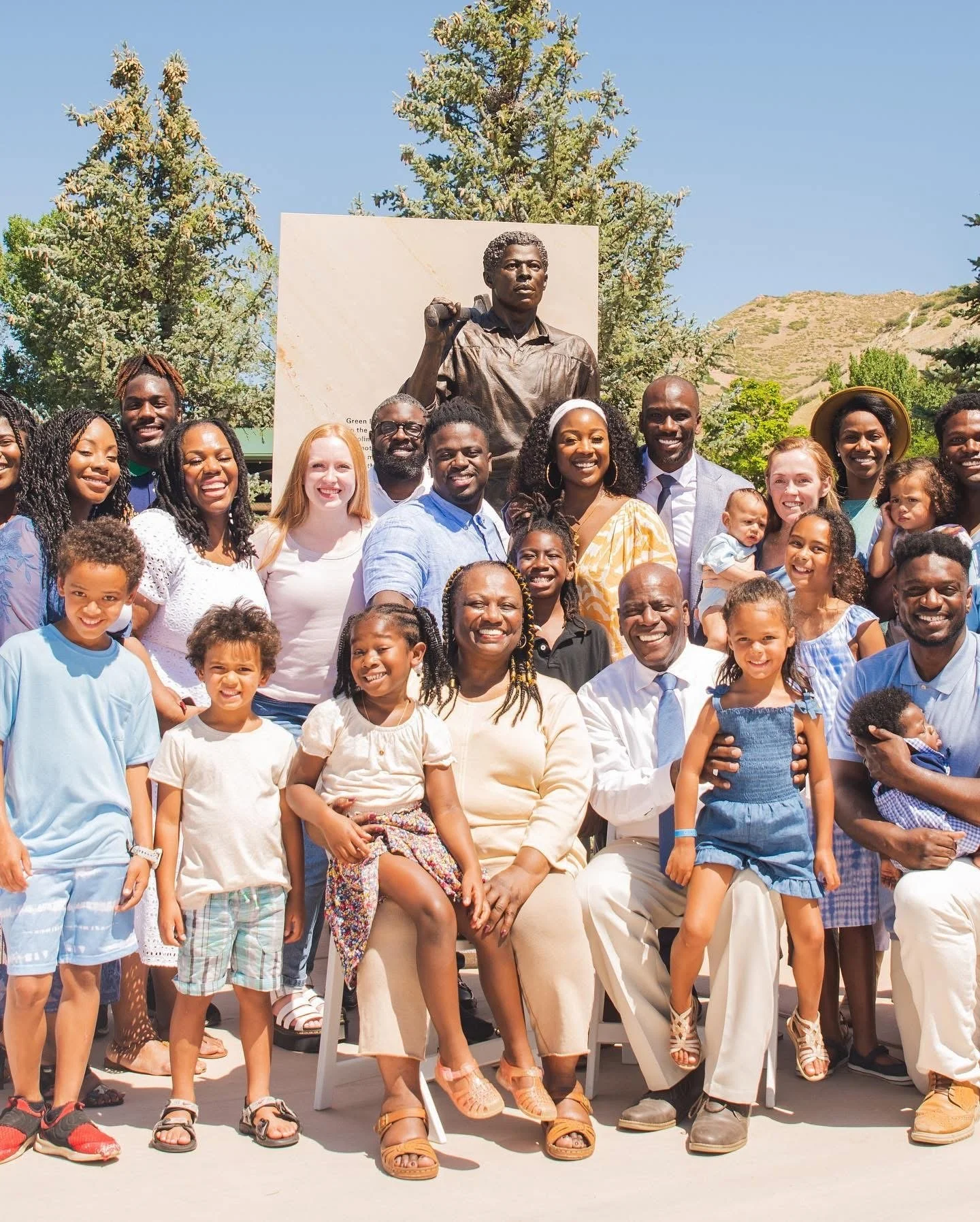
The Bonner Family
Glen Nelson: You know, I've known members of your family over the years. I don't know if we've ever been in the same ward, but definitely the same stake here in New York. A pretty impressive group of people. That's basically code for a bunch of overachiever talented folks. What was your family like growing up and how did that put you on a course for your life and career?
Mauli Bonner: It was brutal in our house. It was cutthroat. It was American Idol before American Idol because we would just compete with everything. Like literally competing like singing competitions. We had categories, song choices, and we would, there's eight of us, right? Eight children. So seven, I have seven siblings and there's eight of us together, four boys, four girls.
Glen Nelson: Where are you in the hierarchy of everything?
Mauli Bonner: I'm the oldest boy, so I got some clout, but I got two other sisters and that just kind of diminishes everything. But we would just compete always with singing, with acting every day. There weren't toys. I can't remember having toys, you know, like we would just compete with each other and sing and judges and then crying and then forgiving and then competing again. So that was my childhood with our family. And then of course, my mother ran a gospel choir. And so we were in the gospel choir. We'd go to The Church of Jesus Christ Latter-day Saints. And then we'd go to, when she'd say, “Now let's go get some Jesus.” Then we'd go to a predominantly black church, whether it's a Baptist church or whatever, you know, and sing and shout and praise the way we knew how culturally to express our feelings. And so that was our childhood growing up. It was this blend between our culture as African Americans and then our faith, which was also such a foundation for us. We moved so much, Glen, like 21 times. I thought it was 19 times. My mother told me it was 21 times we moved before I even got to high school. So that's a lot, right? And so, of course, you move that much, and where's the stability? The Church of Jesus Christ Latter-day Saints. That's what we always had, that consistency.
Glen Nelson: That's a lot. Military kids are thinking, Wow, I thought I moved around a lot. So that's amazing. It's been so great talking with you today, Mauli. Thank you so much for taking the time. How can listeners learn more about you and your work?
Mauli Bonner: My gosh, first of all, I can't believe we're done. What happened? I thought we were just like introducing this thing. Like we're done? Has it been like an hour?
Glen Nelson: It has.
Mauli Bonner: This is crazy. Okay, so people can learn more about me. Where? Well, maulib.com. So that's like where you can learn a little bit about what I've done in music. Find me on Instagram. I don't really go on very much. But when I'm there, you'll learn about what I'm doing. MauliB1 maybe? MauliB, I don’t even know. But I think the best way is to do that.
Glen Nelson: And that's something you should probably know.
Mauli Bonner: Yeah, Google me, okay? If you wanna know. But if you Google me, you'll find like some things I'm working on, and I'm gonna give my email. Can I give my email? No, that's too much. Well, I just, okay. If you have, yes, there we go. Yes, if you want more of what we're talking about or you want it in your stake for something or you want it,
Glen Nelson: On your website, you have a contact thing. So if somebody wants to, they can go there.
Mauli Bonner: Or if you have a question just yourself, please reach out to me, maulib.com, you can find me, ask the questions, and we can have more of conversations like these. Glen, I cannot believe, you're lying. This is crazy.
Glen Nelson: No, I'm not because I because I put lunch in the oven, and I think, well that's burnt now, so never mind, and I'm kidding around, but I have loved talking to you today Mauli. So any last thoughts for us?
Mauli Bonner: Thank you. Last thoughts? I would just say. Reiterating your question, I appreciate that you asked about what's happening today. And no matter where you are on the spectrum of what's happening today, everything is going to be OK. I promise you, it's going to be OK. So just know where you want to be. What part do you want to play? And play that part. And feel good about the part you're playing, no matter what's happening around. Because if we look at just the outcome, then we're measuring by the wrong tool. Because if you look at the outcome of Joseph Smith, his family being hunted down, him dying the way he died, how do we measure what he had done? Jesus Christ, the apostles that were all crucified behind him, how do we measure their success by what happened to them in the end? And you have to measure it by the work you're doing. So find the thing that brings you joy and spend your time in that and know that that is good enough.
Glen Nelson: Amen. Thank you. Thank you for listening to The Center's Studio Podcast. You can access earlier interviews on our website and learn more about the activities of the Center by going to www.centerforlatterdaysaintarts.org. Goodbye.
