December 29 2025-January 4 2026: The Old Testament
The First Testament of Jesus Christ
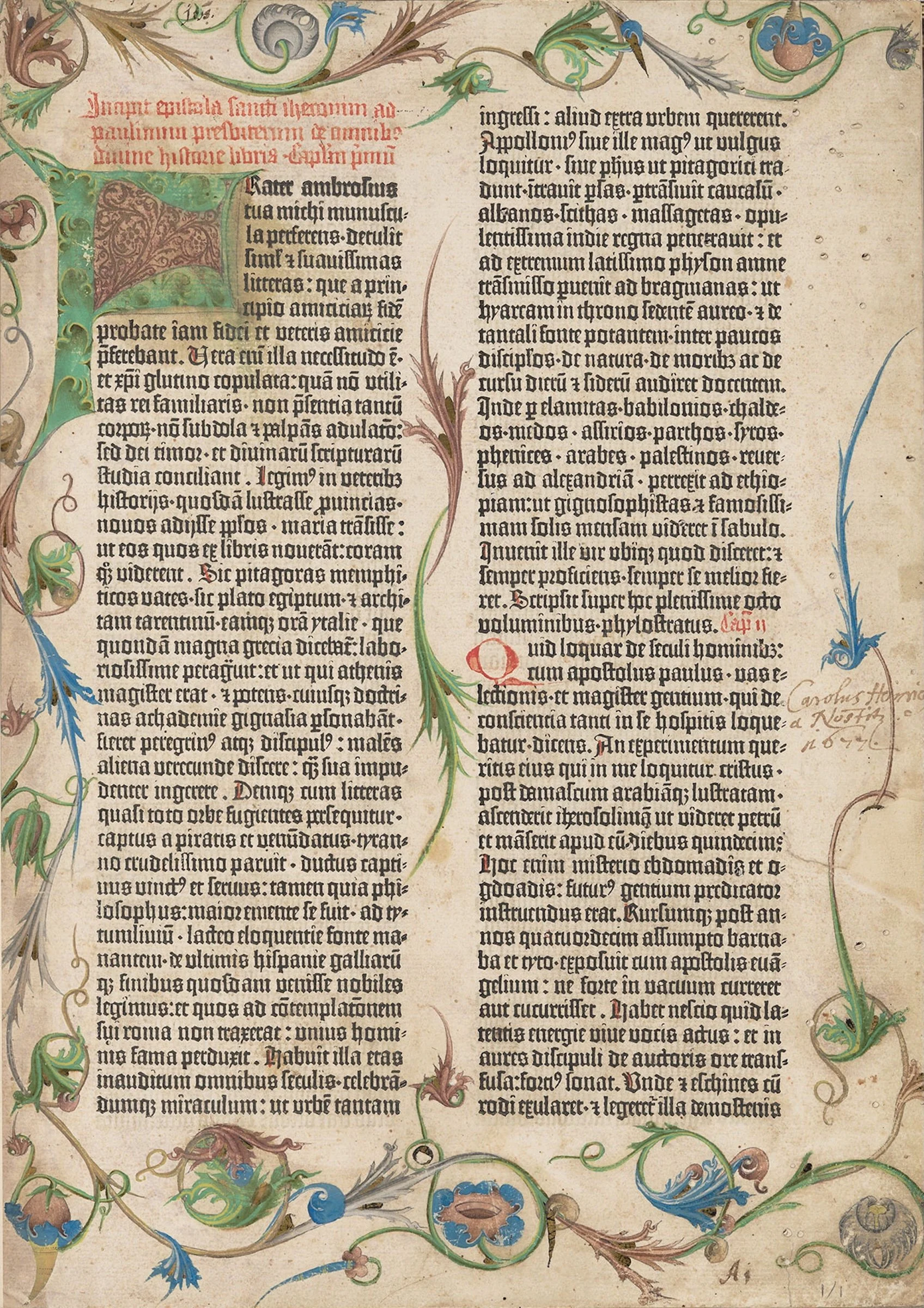
Biblia latina (ca. 1454)
Mainz: Johann Gutenberg & Johann Fust
PML 12, I Flyleaf-1r
Collection of The Morgan Library and Museum
Public domain
In the beginning was the Word. The beginning of the printed word came with the Gutenberg Bible, the first major European book printed using metal movable type. Similar books were printed in Korea nearly a century earlier. Little is known about Johann Gutenberg himself. Around 1450, he likely began preparing for this large printing project, setting each letter by hand. By 1454 or 1455, the first copies appeared. They sold quickly for about 30 florins, which was equal to three years’ wages. About 180 copies were printed, and only 21 complete copies remain today.
As we begin a new year studying the Old Testament, it is helpful to pause and think about reading itself.
Who could read a printed book centuries ago? In Joseph Smith’s day, only a small number of people were able to read. In 1820, UNESCO estimates that just 12 percent of the world’s population could read and write. Literacy increased rapidly during the 19th century. In the United States, early records show that by the 1870s, about 80 percent of people age 14 or 15 and older were literate.
The Smith family read the Bible together at home. Joseph Smith’s early learning from the Bible reflects our latter-day emphasis on studying scripture in the home. In his opening remarks at the October 2018 General Conference, President Russell M. Nelson taught this important principle as we begin our year of studying the Old Testament in Come, Follow Me: “The ideal place to learn the gospel is the home. Your teachers at church can support you, and you can get encouragement from other ward members. But to survive spiritually, you and your family need daily nourishment from ‘the good word of God’” (Moroni 6:4; Russell M. Nelson, “Opening Remarks,” Ensign or Liahona, Nov. 2018, 6–8).
Gospel Questions
1. The adjusted General Handbook (12/16/2025) notes changes regarding appropriate editions and translations of the Bible in Church classes and meetings. As you begin a year of immersion into the Old Testament, do you have plans to expand your study with additional texts?
2. God preserved these ancient writings for a divine purpose. What do you hope to find in the scriptures this year? What will you be looking for in the Old Testament?
3. The Old Testament focuses on the theme of covenants and creating a covenant people. What are the covenants you have made with God?
For Children and Youth
Hi. Can you imagine holding a book that is 570 years old? The Gutenberg Bible (Biblia latina) is a rare treasure. There are only 21 complete copies in the entire world! But anyone can read these chapters today because the Bible has been printed in every language. This year, as you study the Old Testament, you will read the same stories that children have loved for centuries: Noah and the Ark, Jonah and the Whale, Daniel and the Lion's Den, the Garden of Eden, David and Goliath, Joseph and his coat of many colors, and many more.
1. What makes these stories timeless?