January 12-18: Genesis 1-2; Moses 2-3; & Abraham 4-5
"In the Beginning God Created the Heaven and the Earth"
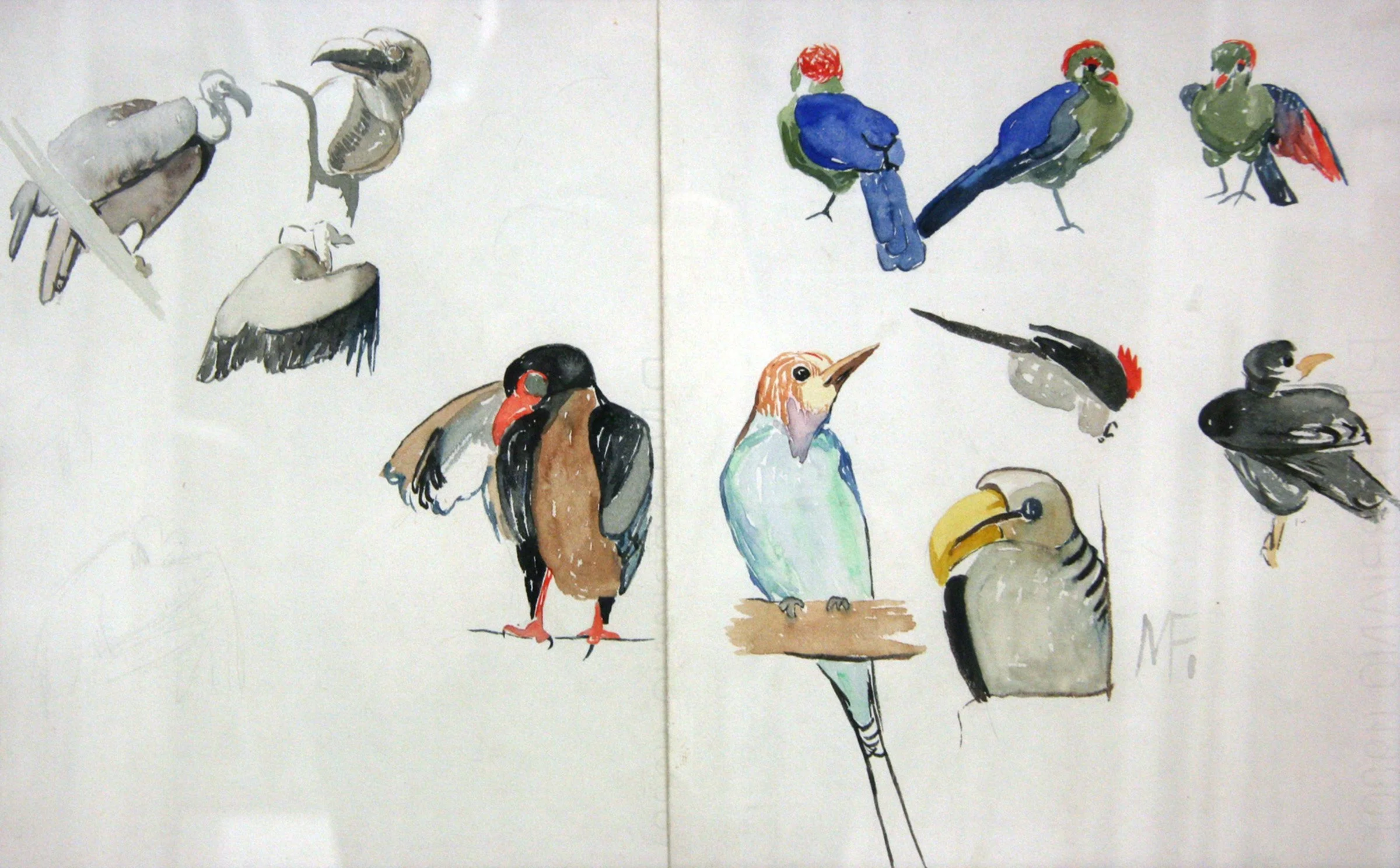
Mabel Pearl Frazer (American, 1887-1981)
Jungle Birds (1930s)
Watercolor, 10.63 x 17.13 inches
Springville Museum of Art, Gift from Richard Waldis, in Memory of Nettie Waldis (1988.066)
Used with permission of the museum
The earth is more than a temporary home. In the Doctrine and Covenants, we learn that the earth will be sanctified and “crowned with glory, even with the presence of God the Father.” It was created so that those who inherit the celestial kingdom may live on it forever (see D&C 88:19–20). In the April 2000 General Conference, then Elder Russell M. Nelson explained that the Creation occurred in seven periods of time rather than seven 24-hour days. He taught, “Whether termed a day, a time, or an age, each phase was a period between two identifiable events—a division of eternity” (“The Creation,” April 2000 General Conference).
The act of creation is sacred. This includes self-expression and artistic creation. Early Utah arts leader Alice Merrill Horne wrote about a blessing she received as a child from Eliza R. Snow. In that blessing, Snow taught, “Life in the influence of art trains the soul to respond to the God-like in man and nature, to feel the beautiful and to cherish and follow higher ideals. Soul greatness is the ultimate end and aim of all effort” (Alice Merrill Horne, “Home and Ideals,” Woman’s Exponent, February 15–March 1, 1901, 81).
President John Taylor also spoke prophetically about learning and culture. In 1857, he said, “You will see the day that Zion will be far ahead of the outside world in everything pertaining to learning of every kind, as we are today in regard to religious matters.”
This same hope was echoed years later. In 1920, Mabel Frazer wrote an article for the Beehive girls of the Church. She predicted that people throughout the world would one day come to understand and love the gospel of Jesus Christ through the study of our art. She wrote that this art must grow naturally from daily life and personal experience. “That spontaneous self-expression,” she explained, “is the sort of development which will some day be recognized by the world as a great ‘Mormon’ art” (Young Women’s Journal, 1920, 558–59).
Gospel Questions
1. Thinking about each day of the creation, what was the "gift" that God gave the world each day? How have each of these gifts blessed your life?
2. What do you think it means to "replenish the earth"? (Genesis 1:28; Moses 2:28; Abraham 4:28)
3. Before the Fall, Adam & Eve knew obedience, or right and wrong. After, they knew good and evil. What is the difference?
4. What things do we learn differently about the story of the Fall from modern scripture? How does this help us understand Adam & Eve, the Fall, and ourselves?
For Children and Youth
Hi. Our beautiful earth needs your help. The Church has encouraged parents to teach their children about caring for the planet, but you can help your parents do it, too. Elder Patrick Kearon has taught: "Parents can teach children at a young age to be environmentally conscientious. Parents, assisted by faith communities, can teach and show that the responsible use of resources is a way of respecting all humankind, of caring for our brothers and sisters the world over.”
1. What could you do to conserve water and energy, avoid waste, cut down on polution, and protect animals and plants?