January 26-February 1: Genesis 5; Moses 6
"Teach These Things Freely Unto Your Children"
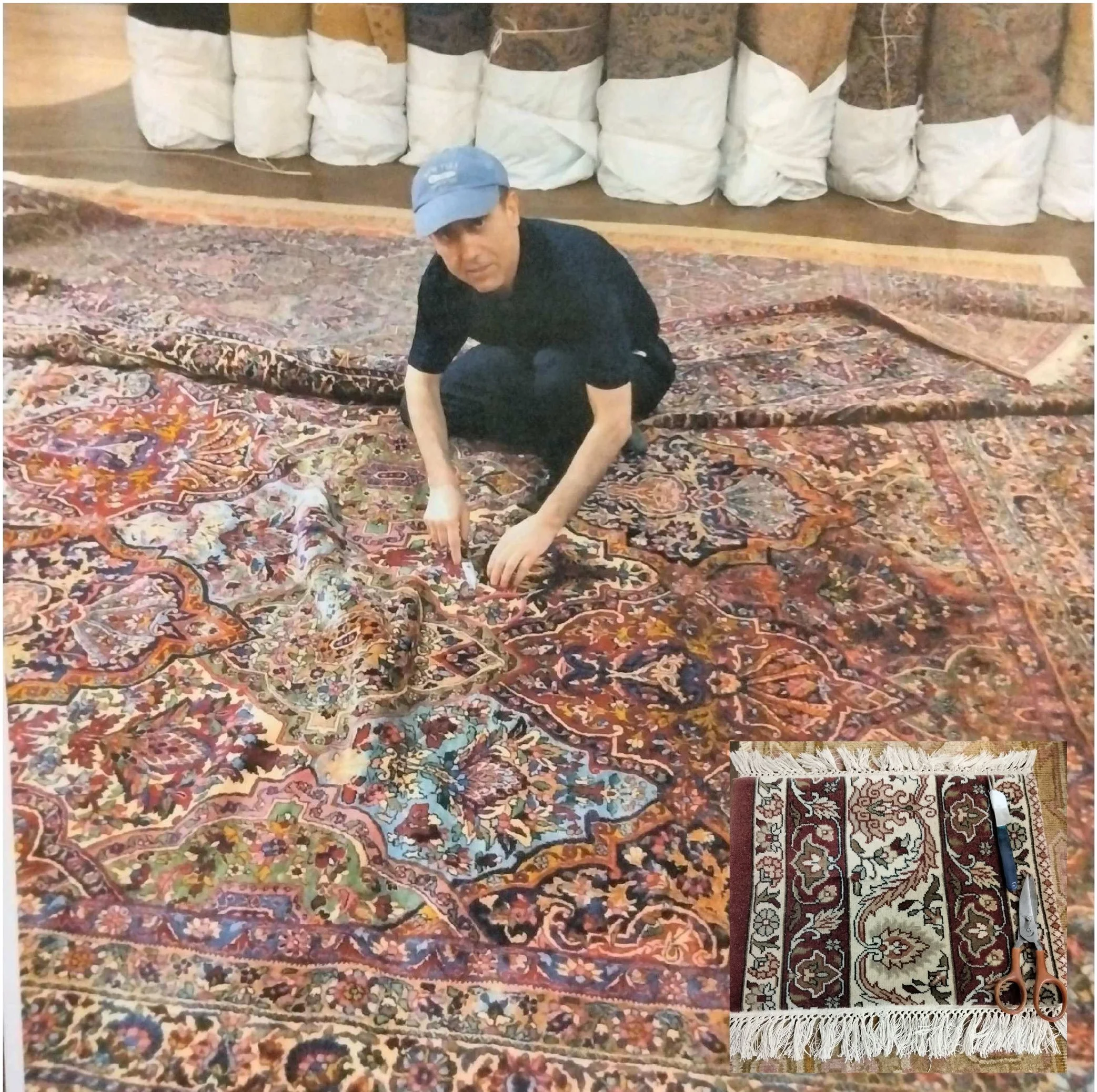
Seyed Kamaledin Mousavi (East Azerbaijani, born 1960)
Untitled rugs
Photograph
Collection of the artist
Used with permission of the artist
Seyed Kamaledin Mousavi was born in a small city in East Azerbaijan, Iran. From a young age, he learned the skills of carpet design, dyeing, weaving, and repairing ancient rugs. When he was sixteen years old, he moved to Tehran with his older brother. Since then, he has spent his life designing, restoring, and selling rugs. In recent years, Mousavi moved to New York City, and in December 2024, he joined The Church of Jesus Christ of Latter-day Saints.
This week’s Come, Follow Me chapters in Genesis and Moses describe the genealogy of many generations. They also teach the importance of passing God’s principles on to our children. The idea of carrying truth and identity forward over centuries is similar to passing down a family heirloom. A Persian rug is one example. The tradition of Persian rug-making stretches back more than 2,500 years.
Persian rugs are filled with detailed patterns and rich colors. These designs often represent spiritual ideas, such as the Tree of Life, paradise, and sacred gardens. Some traditional patterns symbolize a doorway to the divine or a path toward spiritual understanding. Paisley shapes can represent eternity and endurance. Even the geometric designs found in tribal rugs may suggest a spiritual journey or the winding path of life.
The colors in these rugs also carry meaning. They reflect values that have been taught and preserved through generations. At the same time, artists weave their own beliefs, hopes, and personalities into their work. Because of this, Persian rugs are sometimes described as reflections of the weaver’s soul.
Persian rugs are used in religious ceremonies, and the very placement of a small prayer rug, like the one designed by Mousavi inset into the photograph of him at work, on an ordinary sidewalk anywhere in the world turns a busy, public street into temporary, holy ground.
Gospel Questions
1. Why is retelling who begat whom and how long they lived an important part of the story (Genesis 5; Moses 6:8)? How does knowing your family history impact who you are?
2. In Genesis, we read only of Enoch that he "walked with God" (Genesis 5:22) In Moses, we learn in greater detail what that means (Moses 6:26-35, 39). What does it mean to "walk with God"? What times in your life do you feel you were close to God? What are the greater details that you would give to describe that time?
3. What is the difference between how Enoch saw himself and how the Lord saw him? How do you think understanding how the Lord saw him helped Enoch?
For Children and Youth
Hi. One of the biggest jobs of being a parent is to teach their children. It's not easy. They want to teach and you want to learn, but sometimes these goals crash into each other. In the Old Testament, we learn about many families. As you study, think about the relationships between parents and children. And then compare them to your own family.
1. How can you make it easier for your family to gather and study the scriptures together?