My Grandmother, Minerva Teichert
By Jeanette Ensley, Center Festival 2018 | Watch on Youtube
I'm going to try to tell you something you haven't heard before about my grandmother, Minerva Teichert.
She's my maternal grandmother, and after her death in 1976, she became very popular in LDS circles. She has been the subject of articles, theses, lectures, books, videos, and multiple exhibits, with copies of her works appearing in many meeting houses and temples. Forgive me if I use the terms Minerva, Grandma, and Teichert interchangeably.
In particular, her life exemplifies the historic struggles of LDS women who are gifted artists, who feel compelled to develop their talents, but who also believe in the divine role of motherhood and the mandates to love the Lord and to love one's neighbors.
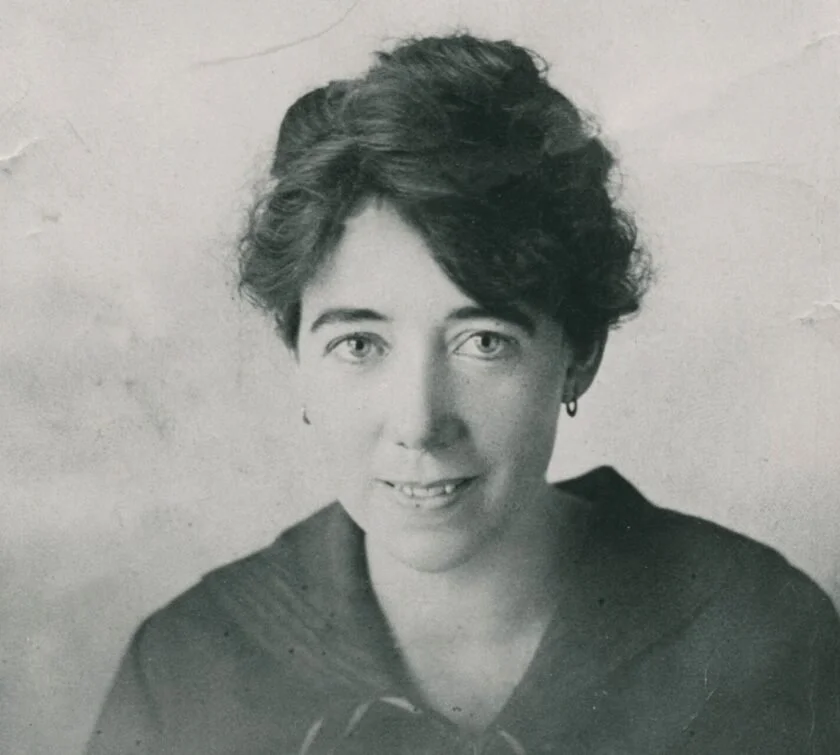
Photograph of Minerva Teichert. Image courtesy of the Church of Jesus Christ of Latter-day Saints.
Financing Missions in Switzerland and Art School in NY
Grandma's family of many siblings was poor. After graduating from high school at the age of 17, she began teaching school, first to finance her father's mission in Switzerland, and then to finance her own art training. This was done with repeated moves back and forth, from school teaching in Idaho to art school in Chicago and New York.
From these years of study and living on her own as a single woman, she learned to be an independent thinker and developed a moral compass that she believed should be adopted by all of society. She did not hesitate to write legislators, the president of BYU, or the prophets to directly state her views and recommendations.
Being a Grandmother
Teichert was thrilled to be a mother and grandmother and viewed this as her most important role in life. However, personal visionary experiences taught her that she must not let that role drown out her need to continue her craft.
For us, the California grandchildren, the visits she and Grandpa made to our house were special and happy times. On one such occasion I was a teenager and had been playing Gollywog's Cakewalk by Debussy on the piano. I was asking her what a cakewalk was. She stood up, assumed the dance position with an imaginary partner, and proceeded to dance a cakewalk around the living room.
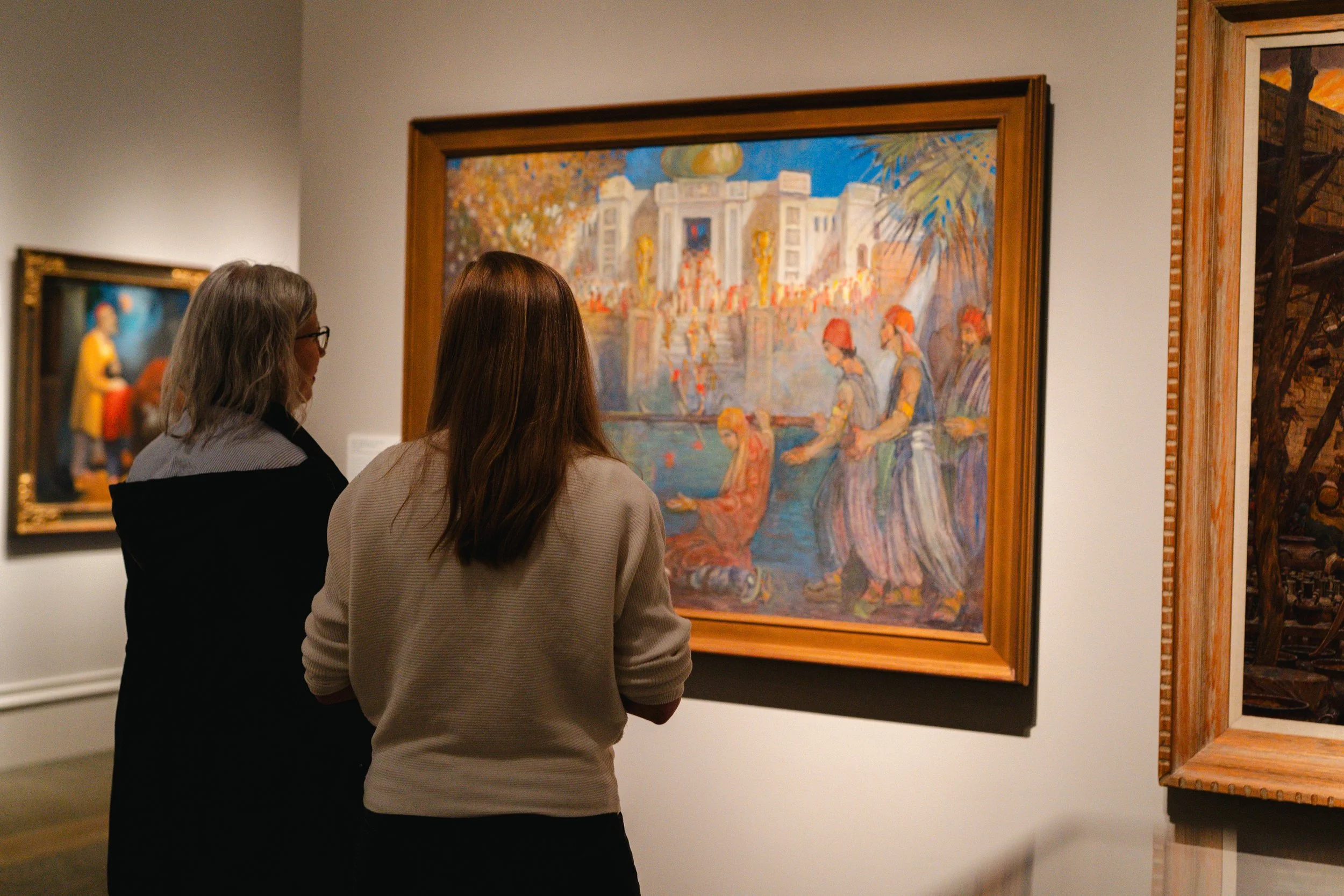
Minerva Teichert’s House of the World on display at the Church History Museum during the Center’s exhibition Work & Wonder in 2024.
On Juggling Family and Career
My sister Marion Wardle is a curator emeritus from BYU, and she is the published authority on all things related to Minerva Teichert. Of course, we always discuss grandma's stories. This is what she had to say:
"As for stories, I believe mine would be about how hard it is, and was for Grandma, to juggle family and career. I can think of three stories that demonstrate this.
One, when I asked my mother how grandma did it all, raise five kids, paint prolifically, raise chickens, keep a large garden, make her own soap, help with the dairy, wash with a ringer washing machine, and cook for lots of people on a wood-burning stove, mother said, she had a maid. I asked her who the maid was, and she pointed to herself. Our mother enabled her own mother's career by helping so much around the house. She was the only daughter.”
When Grandma wanted an electric stove to ease her lot, Grandpa didn't want to get one, so Grandma ordered one. And every day she would say to Grandpa, I wonder when that new stove will be here. And he would say, “What stove?” But he was used to the idea by the time the stove arrived.
Why did she complete the Manti Temple World Room in 23 days? She had a son who was a senior in high school at the time, and she needed to get back to him. The center of Grandma's house, the living room, was always an active studio, and the walls were never without a tacked-up canvas and a painting in progress.”
Ministering
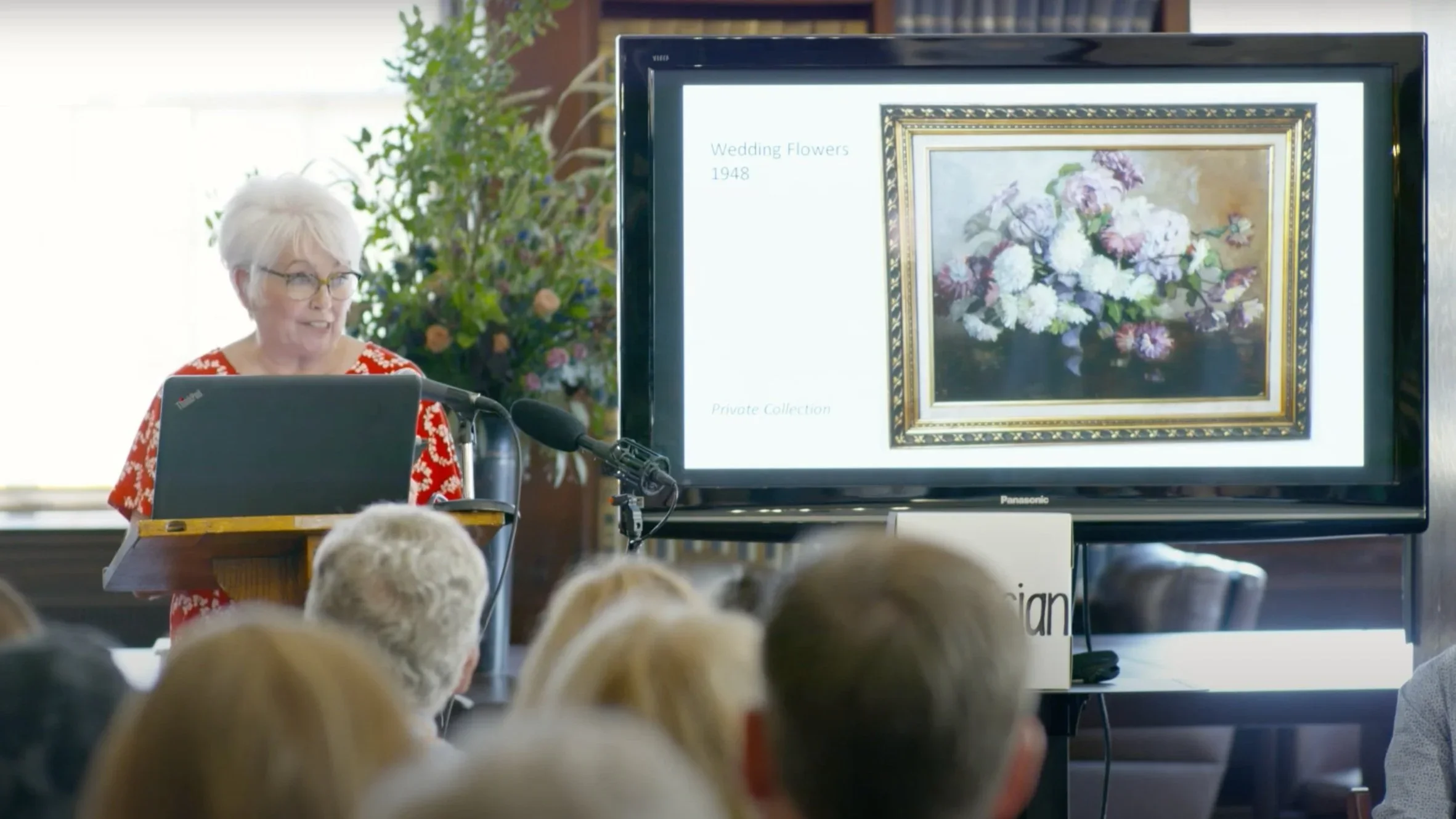
Grandma had a keen interest in the welfare of her neighbors. One of her well known acts of service was the painting of hundreds of flower arrangements for the funerals and celebrations of her friends. This is a unique way of ministering (I've asked myself what would be the reaction if I took my violin to the home of grieving or otherwise needy friends and said I was there to play for them.)
Grandma had a deep and abiding faith in the power of prayer. She was constantly studying and learning. The scriptures were a treasure trove of information and spirituality, which she was eager to impart to others.
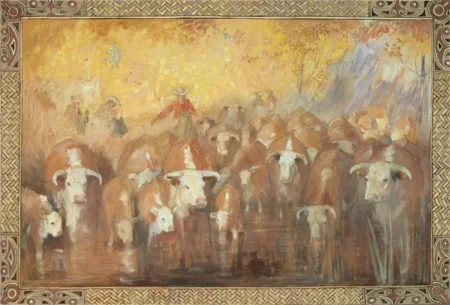
Herding Cattle Across the River, 1956, Mural by Minerva Teichert.
Overcoming Setbacks, Roadblocks, and Rejection
Though her charitable works were many, she didn't always receive charity and kindness in return.
In 1933, Teichert painted murals for the Montpelier, Idaho tabernacle as tithing in kind. A wagon train was painted to fit over the pipe organ in a great arch. It was a monumental work. And loved by almost everyone. Fifteen years later, during a remodeling of the temple, it was taken down and ripped to shreds. This broke Minerva's heart.
Sometime in the 1940s, Teichert was commissioned to decorate a room in the Idaho Falls Temple. But then someone decided that only priesthood holders would be allowed to paint in the temple. She was disappointed, of course, but not bitter. Times and edicts change, and in 1947, at the age of 59, she was on a scaffold painting the huge murals in the Manti Temple World Room. Teichert forgave those who offended her.
Upon completion of her 40 unsolicited Book of Mormon paintings, they were rejected. Towards the end of her life, she finally gave them to BYU. Her sketches of the Mormon March were finally self-published. These are great disappointments, but they did not diminish her confidence in her ability or her mission to paint.
How to sing in church
Once, while she was singing with the congregation at a conference in the tabernacle in Salt Lake, a man next to Grandma turned and said, “My, you have a terrible voice.”
And her reply was, "I sing with the voice God gave me."