Journal
Mormon Easter
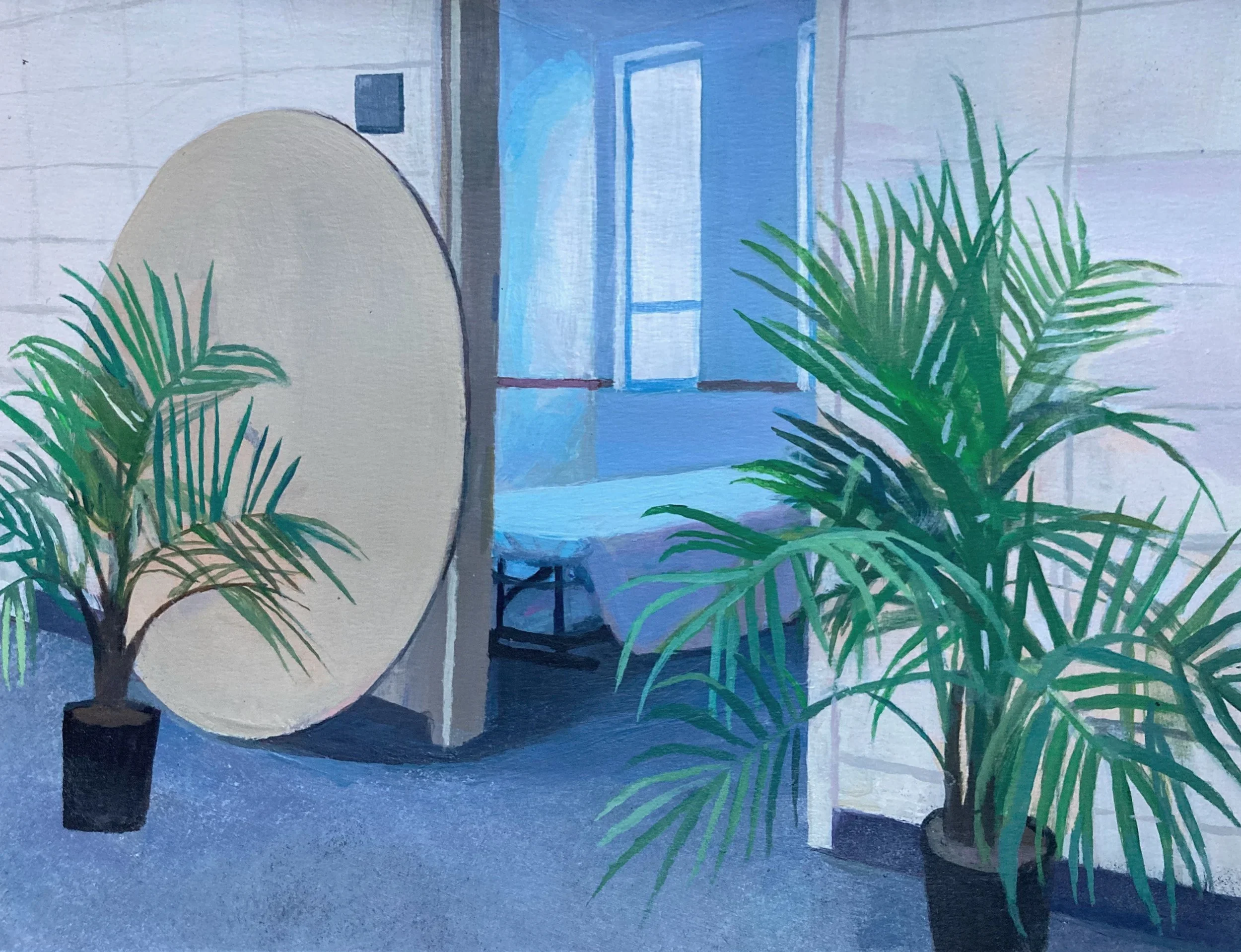
Circular folded tables, white tablecloths, and textured walls are materials common to most Latter-day Saint chapels, but here Rupard uses them to visualize a scene from the New Testament, where the stone is rolled away from the sepulcher made to reveal Christ’s empty tomb on Easter morning.
To Think About Jesus
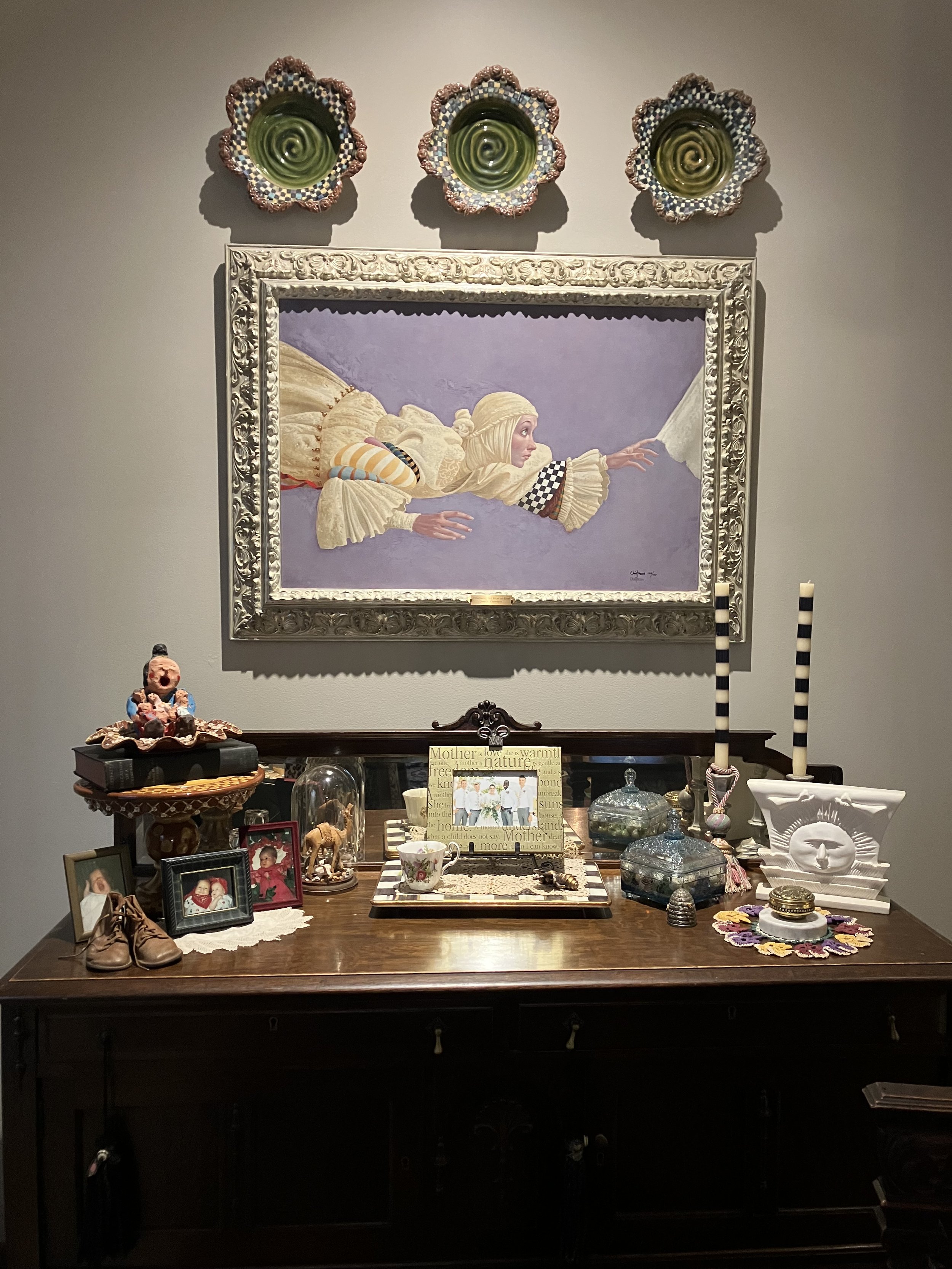
What art do you keep in your home that reminds you of Jesus Christ?
For this Easter season, we invited a few friends of the Center to reflect on that question by sharing a work of art that lives in their everyday space and to tell us why it matters to them.
Four Artists, One Studio—Collaborating at the Artists Residency
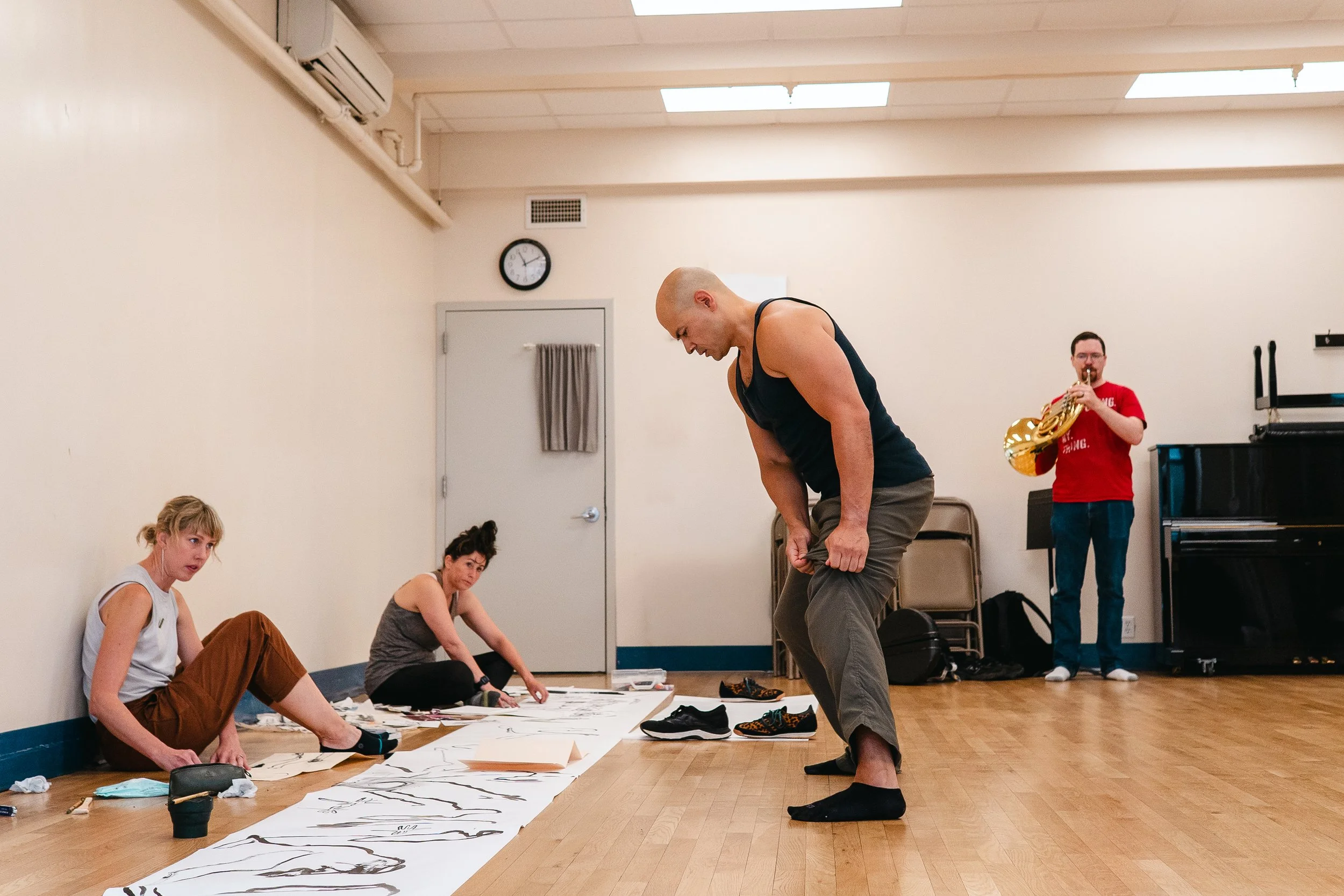
On the third day of last year’s Residency, four artists from the cohort—choreographer Thayer Jonutz, visual artists Zinta Jaunitis and Jackie Leishman, and composer David Jones—gathered in Thayer’s dance studio for an impromptu collaboration. Thayer danced sections of his new work Scorched while David improvised on the French horn. At the back of the studio, Zinta and Jackie responded by sketching the movement as it unfolded.


Remembering President Nelson Through His Words
President Russell M. Nelson’s prophetic ministry was filled with invitations to rise higher, love deeper, and see farther. Again and again, he pointed all to Jesus Christ and reminded us that our choices here and now shape our future. His counsel was both bold and tender, urging all to anchor themselves in truth. Among his many teachings, five stand out as guiding lights for our day.
10 Works You Should Know: Zinta Jaunitis
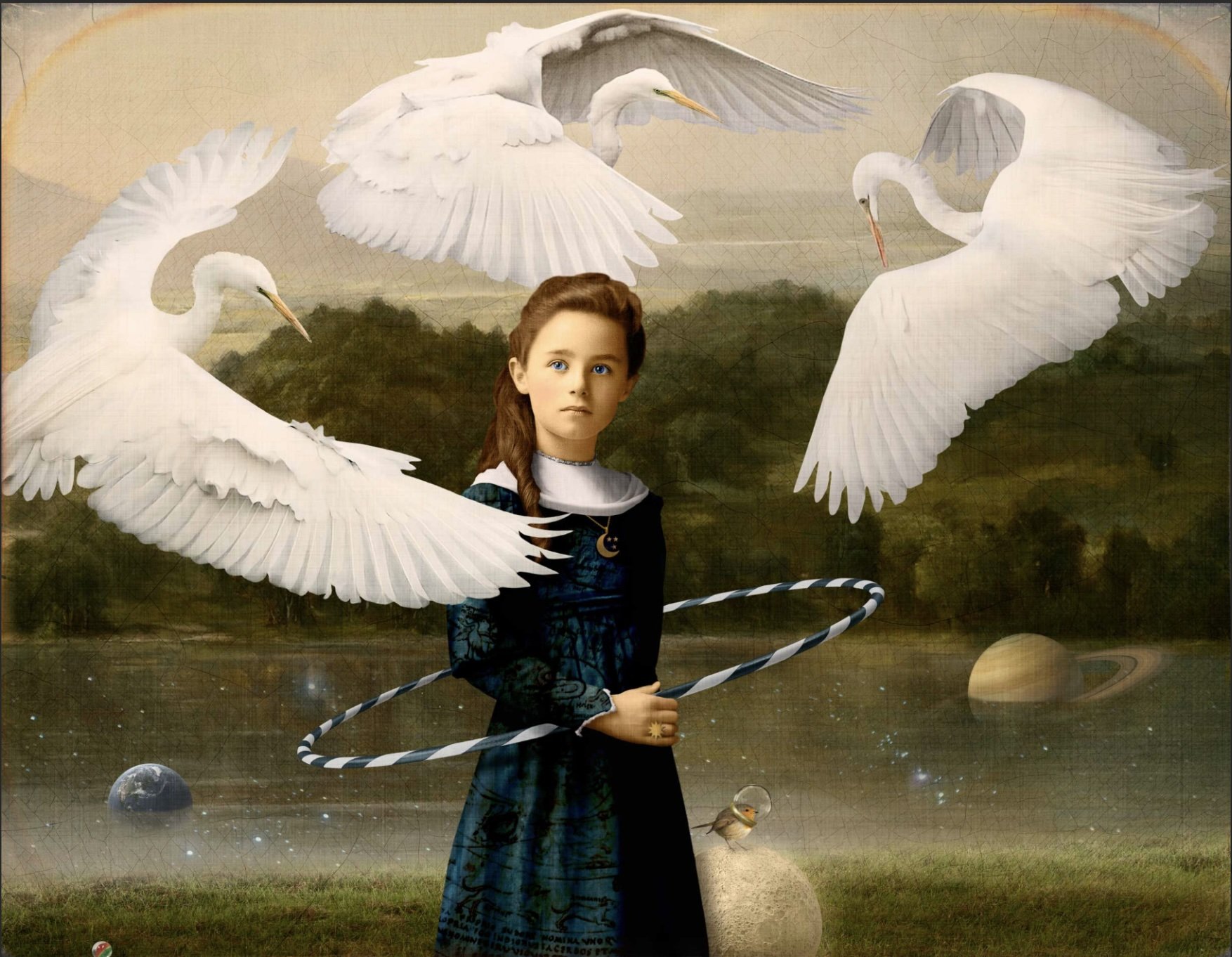
Growing up outside of the U.S., Zinta hasn’t always connected with the American heritage that has largely shaped LDS culture in prior years. As such, her list of “10 works you should know” takes more expansive view by including works from LDS culture and outside works that might resonate within the culture as well. With a good mix of Latter-day Saint and non-LDS artists in her list, you’ll find new perspectives on familiar imagery and ideas in her selections.
10 Works You Should Know: Daniel Martinez
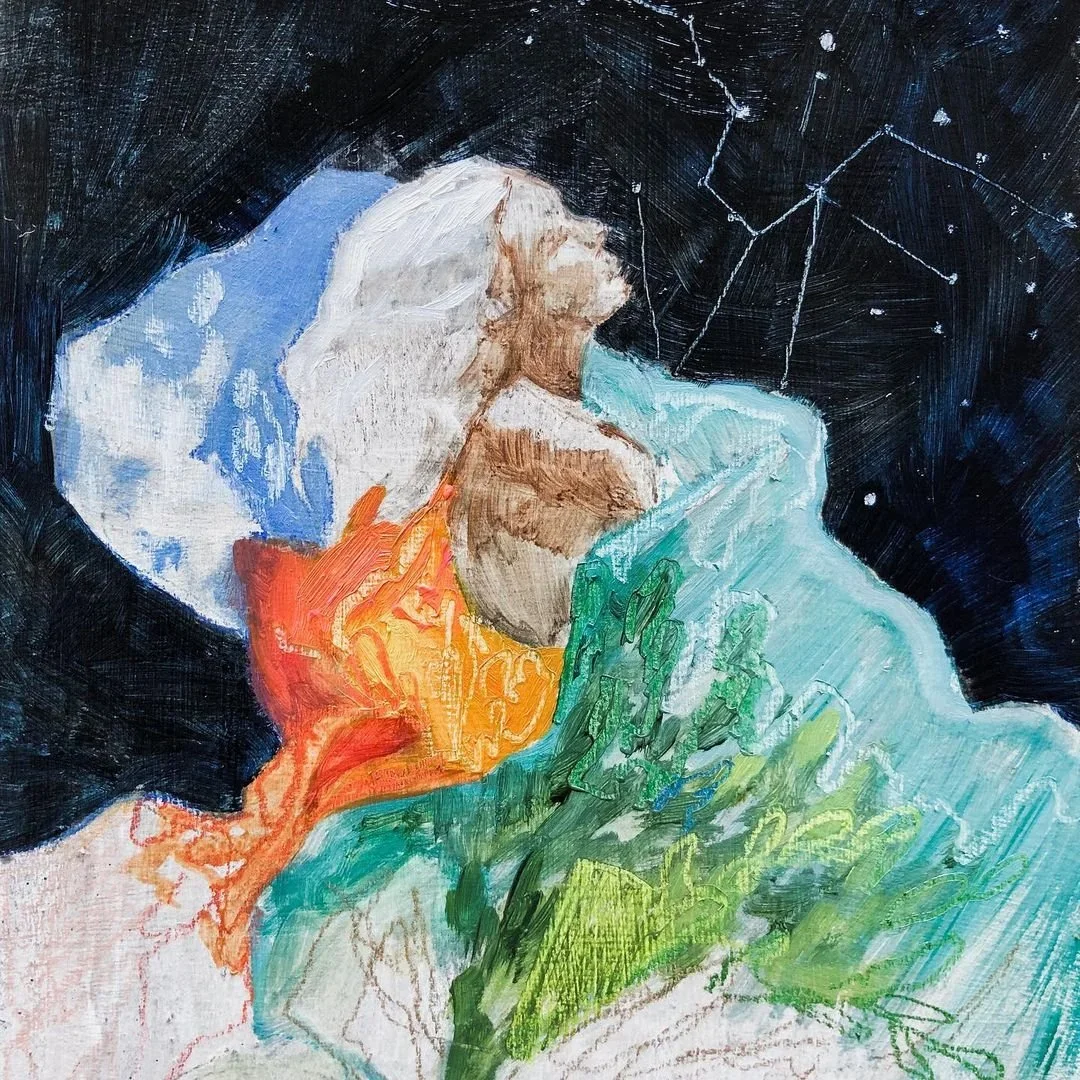
Based in Uruguay, Daniel Martinez’s atmospheric cityscapes breathe life into cities all over the world- from Buenos Aires, to Paris, and Datong, China.
Originally a professional photographer, Daniel picked up watercoloring in 2020 when the events and parties he usually captured were foregone. Inspired by the medium, he has eagerly continued since. “I found in watercolor a form of expression and connection with others that I hadn't been able to achieve before,” he says.
Speaking over Silence: A Conversation with Susana Silva & Gonzalo Silva
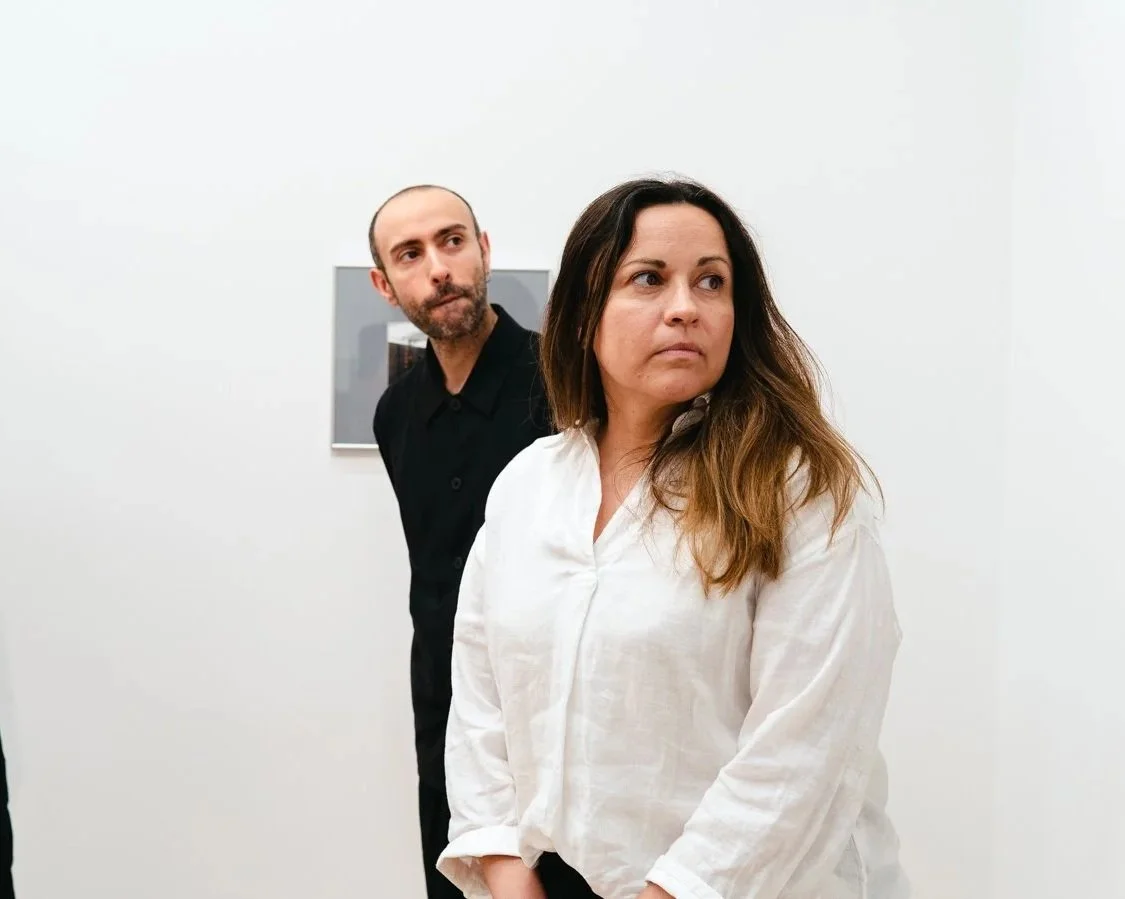
On August 5, 2025, Argentine artists and siblings Susana and Gonzalo Silva opened their first collaborative art show, Instrumentos de silencio, at Sargent’s’ Daughters, a gallery in lower Manhattan. Throughout the evening, visitors peered close to see the intricate details of Susana’s geometric paper cutting and Gonzalo’s photography and 3-D printed works, all of which explore themes of language, translation, technology, and the role of those modes in preserving the stories of communities across time and space in warm hues of red, silver, orange, black, and gold.

10 Works You Should Know: Jackie Leishman
Jackie Leishman is a modern marvel. Her large-scale, mixed media works can be found in exhibitions, publications, and major commissions.
About her list, Jackie says she came at it from a perspective of what images are shaping Latter-day Saint culture. “Things we have seen so many times that the image is almost truth, ideas we hold in which we set ourselves apart, and a history that we continually hold as present.”
The artist acknowledged that while some are beloved, others are even considered problematic by some. Nevertheless, it’s full of icons that are important to LDS canon.


10 Works You Should Know: A Perfect Atonement
Every artist gives something up to achieve their work. They sacrifice their time, their comfort levels, their sense of self; offering up parts of themselves into their own personal creative pursuits. Eventually, after much of this process (and usually after a wrestle or struggle in its own right), every artist steps back and declares, almost messianically, “it is finished.” The point at which a work-in-progress becomes a finished piece is decided by the artist– they’ve done the work, after all.
